


History of Checkers: Origins, Evolution & Fun Facts

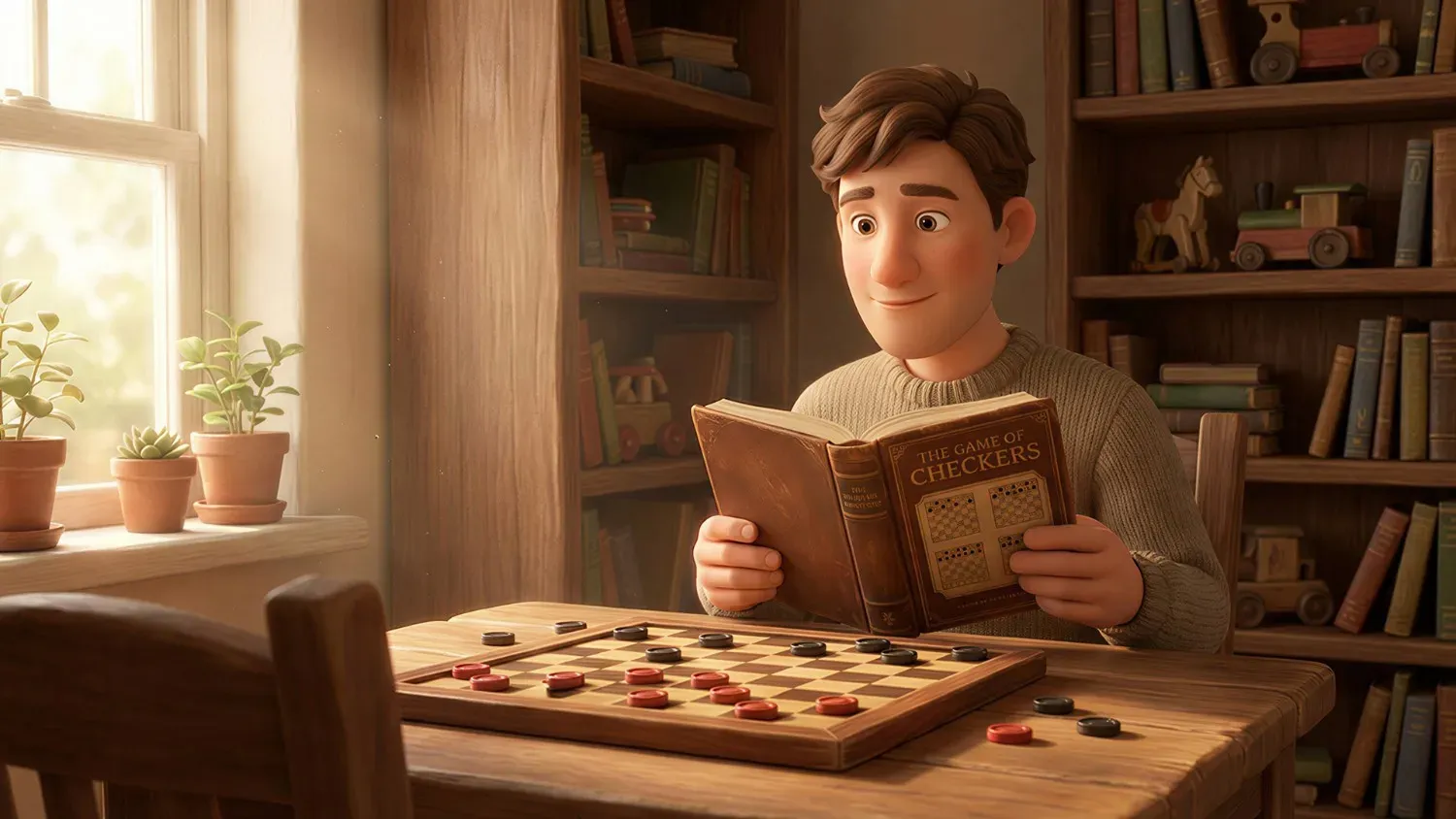
Checkers has one of the most interesting histories among board games worldwide. This is an old game that has been played for thousands of years, long before the birth of chess and many other popular strategy games.
From early civilizations playing on simple carved boards to the modern era, where players can play checkers online with just a few clicks, the history of checkers can teach us the value of the old and eternal game, which has survived and remained topical when played by representatives of different generations.
Table of contents
Introduction to the History of Checkers

Checkers has an extremely long history, dating back more than 5,000 years to ancient Mesopotamia circa 3000 BC, where ancient boards have been found in the city of Ur. Early game boards were discovered there by the diggers, and even earlier hints indicate the existence of games such as these in Egypt as early as 1400 BC.
Now, in the year 2026, checkers remains popular on the internet, with checkers websites where fast matches and deep strategic thinking attract millions of players each day.
What Is the Checkers Game?
In checkers, two friends or opponents play with 12 round pieces each on an 8x8 board with black and red squares; only the dark squares are counted for play. This basic checker board setup has remained almost unchanged for centuries and forms the foundation of fair and balanced gameplay.
You move pieces diagonally one spot at a time; however, you jump over enemy pieces to take them in case the square behind them is vacant, and you should jump if you can.
When a piece accidentally lands on the opposite side, it transforms into a king that also moves towards the reverse side, which makes the game more interesting. This game is connected to the European-style draughts, meaning drawing and pulling pieces across the board and playing it, mostly by the same rules, but Americans refer to the board shape as a checkboard. This is the root of the checkers vs draughts divide, same board, same pieces, same spirit, but two different names shaped by two different continents.
As players understand these fundamentals, comparisons with other classic board games naturally arise, particularly in how movement and strategy differ in checkers vs chess, where each game follows a distinct approach to control and planning.
Ancient Beginnings — The History of Checkers

The earliest indications are in Mesopotamia circa 3000 BC, with stone boards from Ur depicting lines of moving pieces jumping, such as in early checkers games. Much has been said by experts about Alquerque, a naive game on a 5x5 star-shaped board dating back to Egypt circa 1400 BC, that included the essential jump-and-capture element now used in checkers.
These ancient games were distributed by trade routes, adapting a little in any country but retaining the basic entertainment of outwitting your opponent. Checkers was far from alone in this journey, it emerged alongside a whole family of ancient strategy games that shaped civilizations, as seen in the broader history of board games spanning Mesopotamia, Egypt, and beyond.
Alquerque: The Parent of Checkers
Alquerque plays the pieces either straight or diagonal, into vacancies, and you gain by leaping over an enemy to vacancies beyond, as with checkers. It was played by common people and even by pharaohs, and was carried by Arab merchants throughout North Africa and into Europe, slowly transforming into the checkers we have today.
Modern checkers cannot have the sense of jump-heavy action that compels smart risks per turn without the fundamental concepts of Alquerque.
Evidence from Archaeology
Old temple walls in Egypt depict people playing board games with lines that match Alquerque, dated to 1400 BC or earlier. In Ur, diggers pulled up actual boards and stone pieces from graves around 3000 BC, proving folks back then loved strategy games much like ours today. These finds dispel doubts; the checkers' family tree goes back much further than written history. That family tree stretched in many directions over the centuries, and one of its more recent branches is the version people now discover when they play Brazilian Checkers online.
Checkers in Medieval Europe
Around the 1100s, French players took Alquerque, put it on chessboards, and used just 12 pieces a side, calling it "Fierges" or "Jeu de dames" because it felt like the powerful queen piece in chess.
From France, it hopped to Spain as "damas," England as "draughts," and other spots, becoming a hit in castles and homes as "the ladies' game." By the 1500s, books explained rules, helping everyone play fair.
Standardization of Rules
In 13th-century France, they made a big change: you had to jump, if possible, called "Jeu forcé," to stop boring stalls. Poet Philippe Mouskés wrote in 1243 about crowning pieces as "kings" on the last row, giving them extra moves.
Over 1300-1600, folks debated whether men could jump back or kings could fly far; these debates set rules we still use, making games faster and fairer. Over time, jumps changed from being optional to mandatory everywhere, leading to what players now call forced jump checkers, a rule that prevents stalling and rewards careful planning. This evolution also shaped advanced tactics such as the double jump in checkers, where players must continue capturing if multiple jumps are available.
How Checkers Spread Across the World

English folks grabbed it in the 1500s and took it to America, where "checkers" stuck because of the chequered board, while Britain kept "draughts." Ships, soldiers, and settlers carried it everywhere, from Africa to Asia, with books like William Payne's 1756 guide teaching perfect play. Today, over 50 million play online each year, underscoring its global pull. This global spread also gave rise to elite competitive play, producing some of the top draughts players in the world across Europe, Africa, and beyond.
Checkers in America
When settlers landed in the 1600s, they loved checkers for rainy days and called it that to match the board, not "draughts." By the 1840s, U.S. tournaments began, with stars like Sally Allen drawing big crowds. American style uses "short kings" that move one square even backward, simpler than Europe's "flying kings." America's deep familiarity with the game also explains why checkers in pop culture became so prominent in U.S. media, from barbershop scenes in classic cinema to symbolic moments in political history.
Evolution of Rules and Gameplay
Kings started as super pieces like chess queens, but shrank to diagonal hops in America; jumps went from optional to must-do everywhere. Early play let you pick captures or not, called "Jeu plaisant," but forced jumps made it sharper. Over centuries, tweaks like no backward men jumps kept games balanced and fun.
How Modern Rules Differ
Old games waited till the turn's end to crown kings and let optional jumps; now, promotion happens right away, and you must capture maximally. American checkers: men forward only, short kings, 8x8 board. International draughts: men jump back sometimes, long kings slide far, often 10x10, more moves, tougher wins.
Checkers Variations Around the World

Around the globe, checkers changes boards from square to hex, adds men-only jumps or wild goals like losing on purpose. Over 20 main types exist, each with local twists from trade and culture. The Chinese checkers rules, for instance, replace the traditional capture mechanic entirely with a hopping race across a six-pointed star board — a product of German design that spread through Asia under a different name.
Popular Variants
There are also different variations of checkers with different rules.
| Variant | Board Size | Unique Rules |
|---|---|---|
| German Checkers | 8x8 | Kings leap long over pieces; must capture, but no backward men jump. |
| Turkish Draughts | 8x8 | Pieces move straight ahead or side; kings fly any distance; empty rows start. |
| Hexadame | Hexagonal | Six-sided board; pieces hop to next hex; captures like standard but trickier paths. |
| Belgian Checkers | 8x8 | Same as international but twist: first to lose all pieces wins (reverse goal). |
Checkers in the Modern Era
In England in the 1840s, big tournaments began, and Americans soon followed — a tradition that lives on in today's world's biggest checkers tournaments. Marion Tinsley won five world titles between 1955 and 1991 and was unbeaten until AI. The first checkers-playing computer was built in 1959 by Arthur Samuel, who learned through self-play.
This led to Chinook in 2007, which made it easier for players to play checkers online.
Which mastered the checkers game perfectly, demonstrating that humans could not defeat top play. Online worlds, such as FMJD, now hold annual champs, and Matteo Bernini tops the 2022 lists.
Conclusion — Why Checkers Still Matters
Because of its simple rules and deep strategy, learning how to win at checkers has always depended on smart positioning, understanding forced jumps, and using kings wisely rather than relying on luck. From ancient stone boards to modern mobile apps and AI battles, checkers continues to adapt while preserving its core strategic depth.
Understanding the history of checkers helps players appreciate how modern rules like forced captures, kings, and even stalemate in checkers developed over the centuries.
FAQs
- Oldest boards from Ur, Mesopotamia (3000 BC), with Alquerque in Egypt (1400 BC).
- Yes, checkers' ancestors from 3000 BC beat chess's start in India around 600 AD.
- Same game basically; "checkers" in the USA (simple short kings), "draughts" in the UK/Europe (fancier rules often).
- Traders took Alquerque to Europe in the 1100s, then explorers/settlers to the Americas, Africa, and Asia over 500 years.

Physical Board vs. Digital Checkers: Does the Classic Feel Get Lost Online?
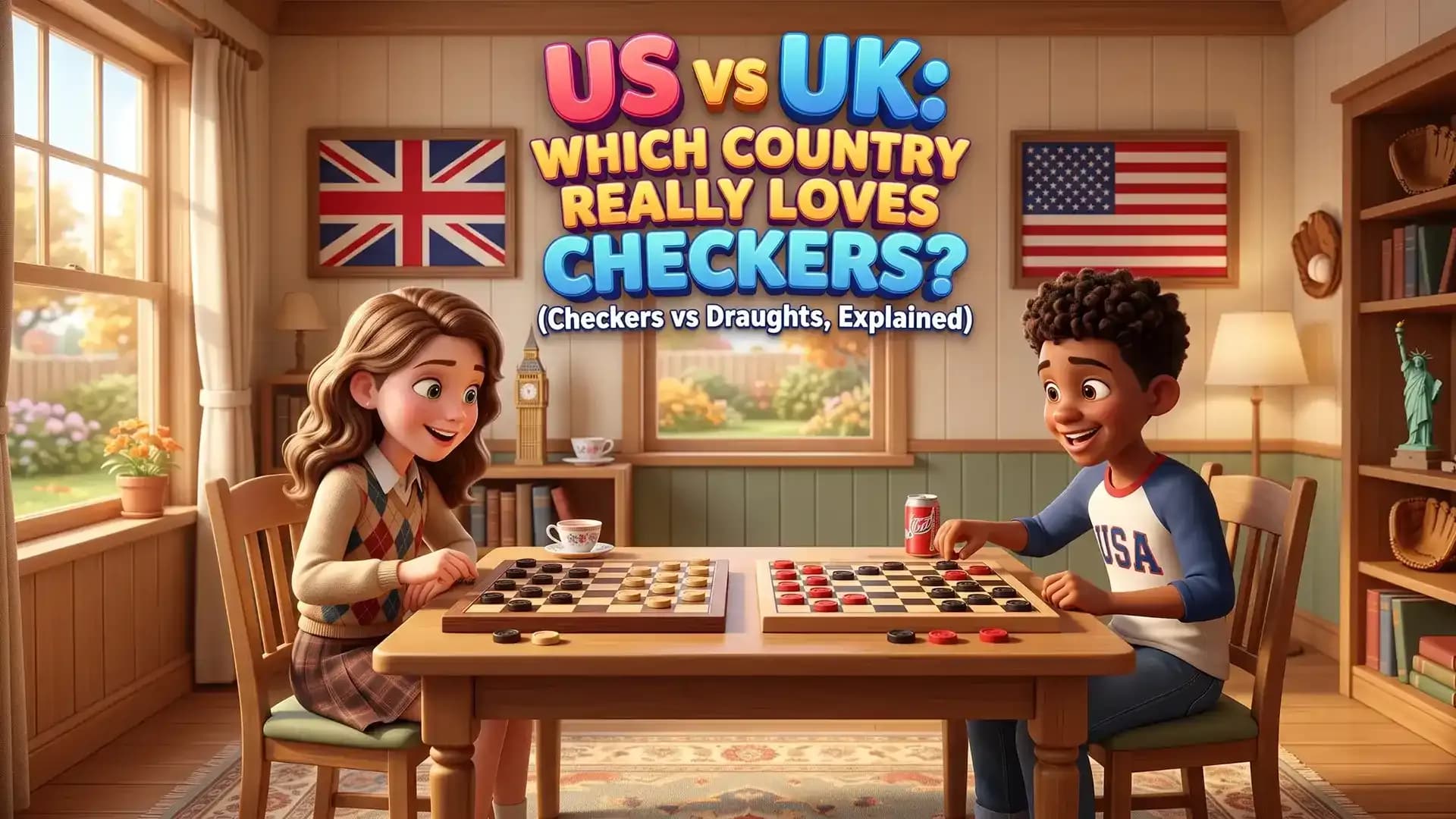
US vs UK: Which Country Really Loves Checkers? (Checkers vs Draughts, Explained)

Enjoy Free Multiplayer Checkers with Friends Online
What Checkers Teaches You: Skills Beyond the Board
The Psychology of Checkers: Why This Simple Game Plays Mind Games