


Draughts vs Checkers: What's the Difference?


For several years now, people have been meeting up to play checkers on an 8-by-8 square board with 64 squares, sliding their pieces around to defeat their opponents. Nevertheless, depending on one’s nation, the traditional game may be referred to under two entirely different terms, each representing distinct competitive techniques.
The existence of two terms for the same game makes us wonder whether there is any difference between draughts and checkers or whether these two games are totally separate.
In the draughts vs checkers debate, both answers are simple and yet complicated. Although the game Americans call checkers is identical to British draughts, "draughts" refers to the massive worldwide family of variants derived from that simple two-toned 64-squared board and that very same strategy. Today, this global connectivity makes it effortless to play checkers online against opponents from any continent, experiencing these diverse rule sets firsthand.
Table of contents
What Are Draughts and Checkers?
The main difference between checkers and draughts is the fact that both represent games of strategy between two players, who play them using boards divided into squares of contrasting colors. Both players use their twelve identical round pieces, placing them at the darkest squares closest to them.
Learning how to win checkers matches requires a strong understanding of positioning, and jumping into an online checkers game is the perfect way to familiarize yourself with all the moves and capture patterns of the basic form of the game.
The Origins of the Game
To truly understand the checkers vs draughts question, we need to travel back to the game's archeological origins. The earliest ancestor of the 64-squared 8x8 strategy system is thought to be the earliest of all strategy board games; discovered during excavations in the Mesopotamian city of Ur (modern-day Iraq), the carbon-dated, primordial game is believed to have existed circa 3000 BCE.
Though this early predecessor of checkers/draughts featured small circular pieces rather than army tokens, in a grid setup similar to the modern-day version, 12 pieces can be observed. Diving into the history of checkers variants reveals that these ancient societies laid the foundation for modern competitive gaming.
However, about 1400 BC, there arose another version known as Alquerque that marked the beginning of the capturing process in checkers; with its bigger board and complex rules, this game was immensely favored by many top draughts players in the world. It took the European board games until the 12th century to undergo any form of improvement. The idea of capturing was cleverly implemented into the traditional 64-square chessboard, giving birth to checkers.
The game involving the use of a chess board with 64 squares was already popular in the British Isles by the sixteenth century, and it was termed "drawing," later to be termed "draughts."
Draughts vs Checkers — Key Differences
In the case of a game being played face-to-face, American Checkers will be exactly the same as British Straight Draughts. As such, both follow similar rules and use twelve tokens from one side.
To gain a global understanding of the game, ‘draughts’ is any game of draughts played anywhere in the world, with bigger boards and more sophisticated moves and captures. In case you are preparing for a game on the normal 8 x 8 board, mastering the precise checkers board setup is essential to ensure your pieces are correctly positioned on the dark squares before the first move.
| Gameplay Feature | Straight Draughts / American Checkers | International Draughts |
|---|---|---|
| Grid Dimensions | 8x8 (64 Squares) | 10x10 (100 Squares) |
| Total Pieces Per Player | 12 Pieces | 20 Pieces |
| Mandatory Jumping | Yes | Yes (Must choose the line with the most captures) |
| Standard Backward Jumping | No (Forward only for regular pieces) | Yes (Regular pieces can jump backward) |
| King Movement Range | Single square diagonally (Forward/Backward) | "Flying Kings" (Can slide across multiple empty squares) |
Types of Draughts and Checkers
Despite its immense popularity in English-speaking countries, due to its use of 8x8 checkered boards, it is important to note that there are numerous types of draughts out there. Exploring the different types of checkers variations around the globe reveals just how versatile this ancient grid system can be.
- International Draughts- International Draughts is most popular form of draughts game played on the 10x10 board and involves 20 pieces for each player. For those interested in trying the game in other boards, Chinese Checkers will be an interesting variant to try.
- Canadian Checkers- another variation of American Checkers/draughts only that it utilizes a huge 12x12 board where each player has 30 pieces.
- Turkish Dama- an 8x8 game of checkers/draughts but uses orthogonal (forward, left, and right) capture and movement, instead of diagonal movement found in Anglo-American draughts/checkers.
- Italian Draughts- also a checkers game played on a standard 8x8 board. The main difference here is that it is illegal to jump over a king, offering some protection for promoted pieces.
How to Play Checkers and Draughts
In order to gain adequate knowledge about this game and know the difference between the game of checkers in America and draughts in Britain, you will need to know the movement on the board.
Basic Rules for Beginners
The first thing the player of this game does is ensure the board is well arranged before play starts. This game begins by placing 12 pieces on the board in the first three rows.
When an opposing piece is placed diagonally on the opposite side of one of the pieces you own and a vacant spot is located right at the back of the piece, you are supposed to hop on the piece and place yours at the empty spot.
Important Note: Capturing is strictly required. Beginners often ask are jumps mandatory in checkers or draughts, and the answer is yes; you must take the jump if it is available.
How Kings Work
Once any of your regular checkers or draughts pieces reaches the far end of the opponent's side of the board, it is crowned and becomes a King. The king token is represented by stacking a captured piece directly on top of it. While regular pieces may only move diagonally forward, kings are permitted to move both diagonally forward and backward.
How to Win the Game
The winner of a game of checkers/draughts must be someone who has managed either to remove all of his/her adversary’s pieces off the board or force his/her adversary into a situation in which all of his/her pieces have nowhere else to go but stay put. It is also asked: can you stalemate in checkers/draughts. Locking an opponent into an unwinnable position secures you the game, so it's not actually a stalemate.
Draughts vs Checkers Strategy Comparison
Even though the two versions of the checkers game in question are similar in local play, they have different rules when considered in an international perspective.
Which Version Is More Strategic?
While American checkers, with its common 8 x 8 squares, may afford us the opportunity to sample some of the easiest, yet strategic, games ever, it is in draughts on the 10 x 10 board where the best strategies and even chess-like characteristics show up.
Longer, unblocked moves with checkers, as well as flying kings, allow for greater levels of play. Learning the basic 8x8 best checkers openings can help control center position early on as well as block opponent options, so check out those tutorials if you plan to try and control game flow in a typical checkers game.
Beginner-Friendly vs Competitive Play
Both checkers and draughts are extremely accessible, and while a child can easily learn the basic checkers movements, a Grandmaster of draughts will be able to strategize over multiple deep multi-piece sacrifices moves ahead of their opponent.
Similarities Between Draughts and Checkers
Even with all the linguistic ambiguity between two terms with nearly identical gameplay, checkers and draughts really can only differ on the basic level of name alone.
Shared Rules and Objectives
Regardless of whether you are playing British draughts or American checkers, a certain level of logical forward thinking is required. Unlike other strategy games, the perfect information element in draughts is essential; no cheating is possible, as both parties know what the other will do, and the whole strategy relies on their predicted move. If your opponent's moves create an obvious hole within their defense, you will want to try to force a double jump in checkers or draughts.
Why Both Games Are Still Popular
The success and lasting appeal of draughts and checkers lies in their accessibility: children and adults of any generation can play together seamlessly, and a well-known checkers unblocked game platform is also readily available. Regional adaptations keep expanding that accessibility too, and players curious about hybrid rule sets often look to play Brazilian Checkers online as another way to experience the game's diagonal-capture roots with a fresh twist.
Conclusion
When analyzing the design of these pastimes, researchers often look at the core difference between chess and checkers to see how distinct mechanical rules shape human critical thinking. Ultimately, the mystery dissolves once you realize they are two branches of the exact same ancient tree. Whether you call it checkers on an American tabletop or draughts in a British pub, you are participating in a 5,000-year-old gaming tradition that celebrates pure logic, patience, and spatial awareness. Grab a board, arrange your pieces, and take your place in history.
FAQs
- In the context of the English-speaking world, draughts and checkers are one and the same thing - they have identical rules and are played on an 8x8 chess-like board. On the international scale, draughts is the general name for a game that may use 10x10 or even 12x12 square boards.
- Yes. Traditional 8x8 draughts and checkers have absolutely the same rules, board layout and number of pieces used.
- During colonization times, British settlers introduced the game to North America. Its name comes from the fact that it is played on a checkered board similar to a chessboard.
- On a standard 8x8 board, draughts and checkers are equally hard to play and win. Still, international draughts (played on a 10x10 board with flying kings) is believed to be more complex than standard checkers.
- They can indeed. Unlike non-Kings who are obliged to move and capture only diagonally forward, a crowned piece may freely move both diagonally forward and backward.

Physical Board vs. Digital Checkers: Does the Classic Feel Get Lost Online?
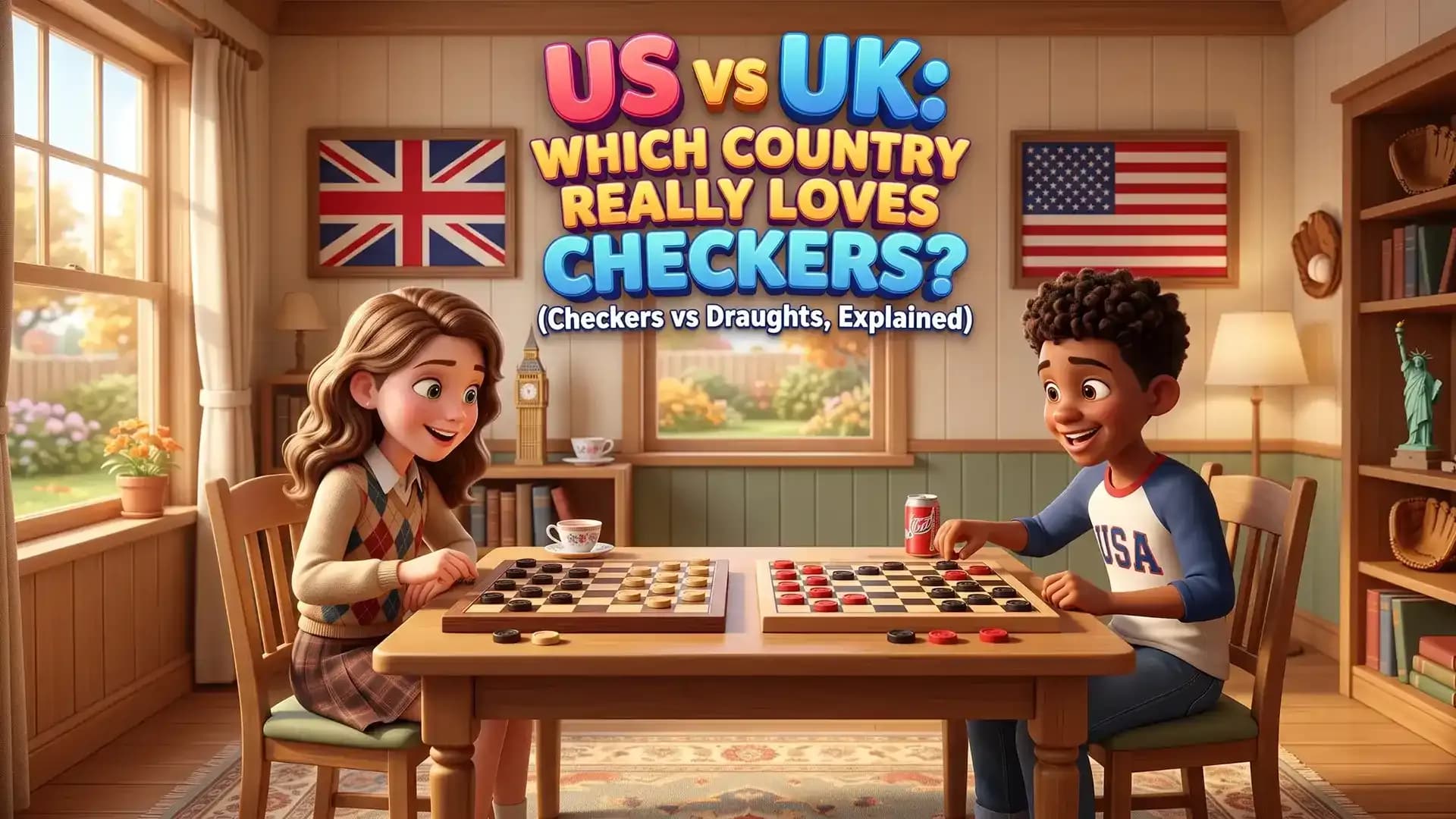
US vs UK: Which Country Really Loves Checkers? (Checkers vs Draughts, Explained)

Enjoy Free Multiplayer Checkers with Friends Online
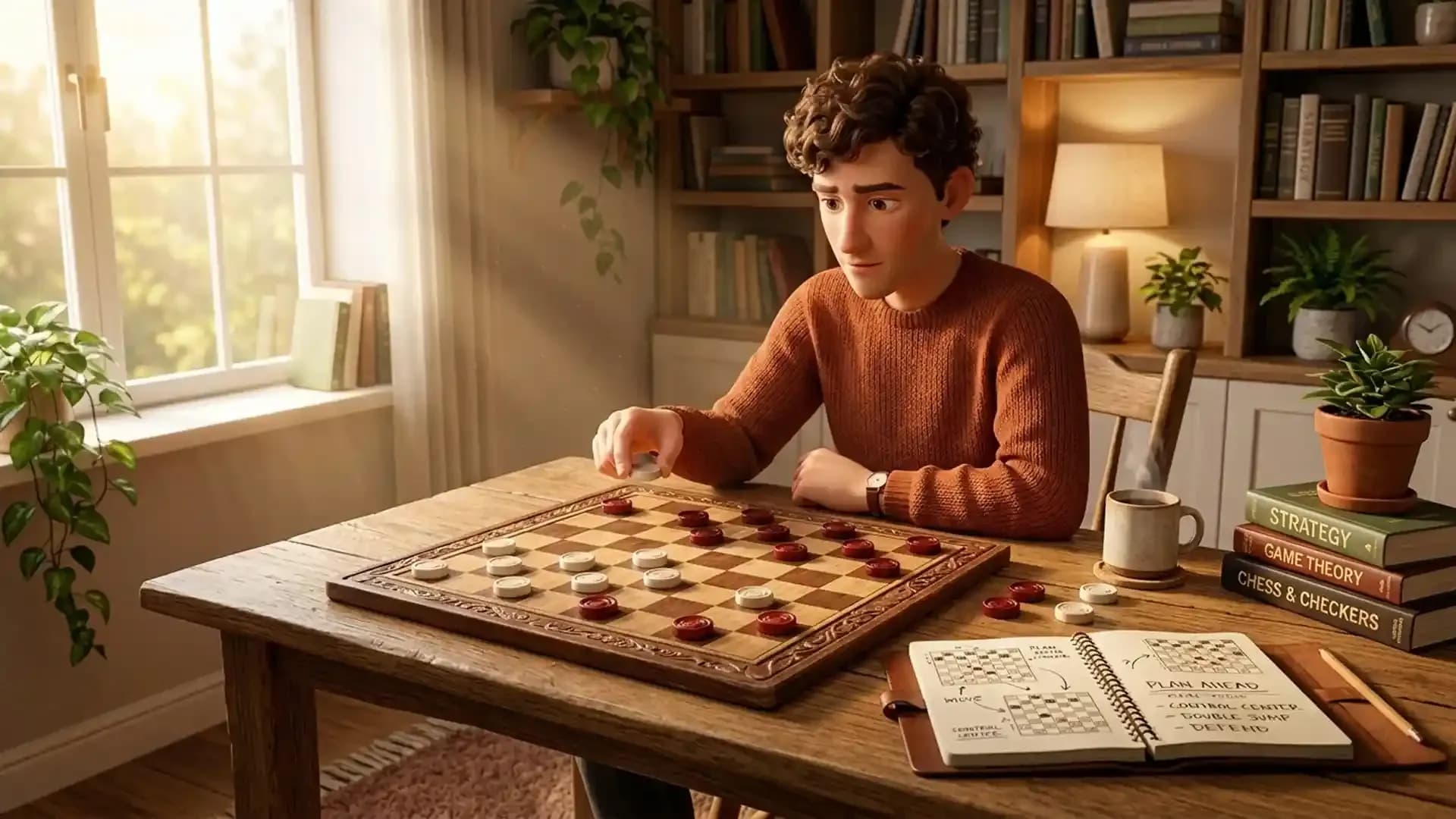
What Checkers Teaches You: Skills Beyond the Board
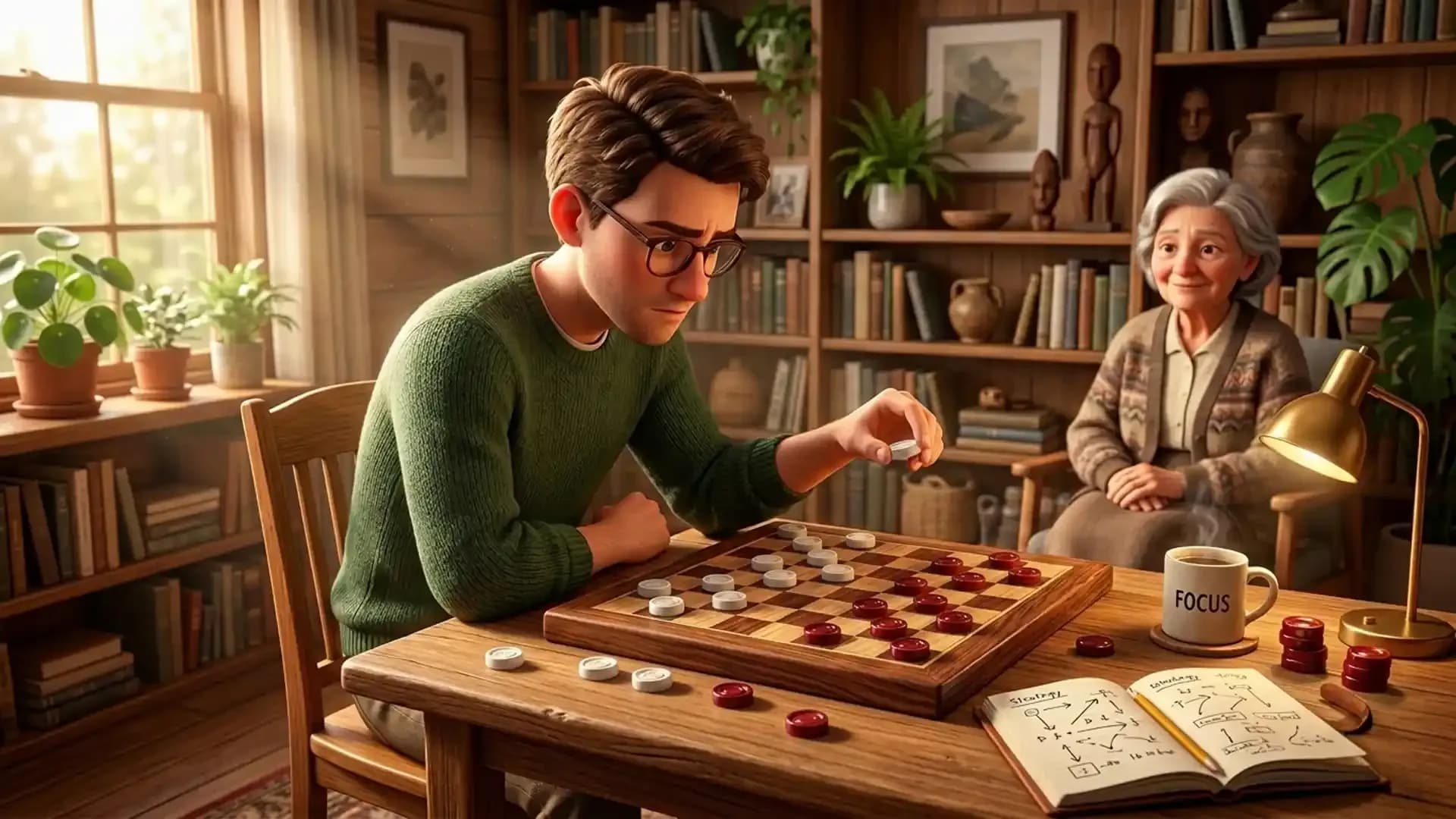
The Psychology of Checkers: Why This Simple Game Plays Mind Games