


How to Play Checkers for Kids: Simple Step-by-Step Rules

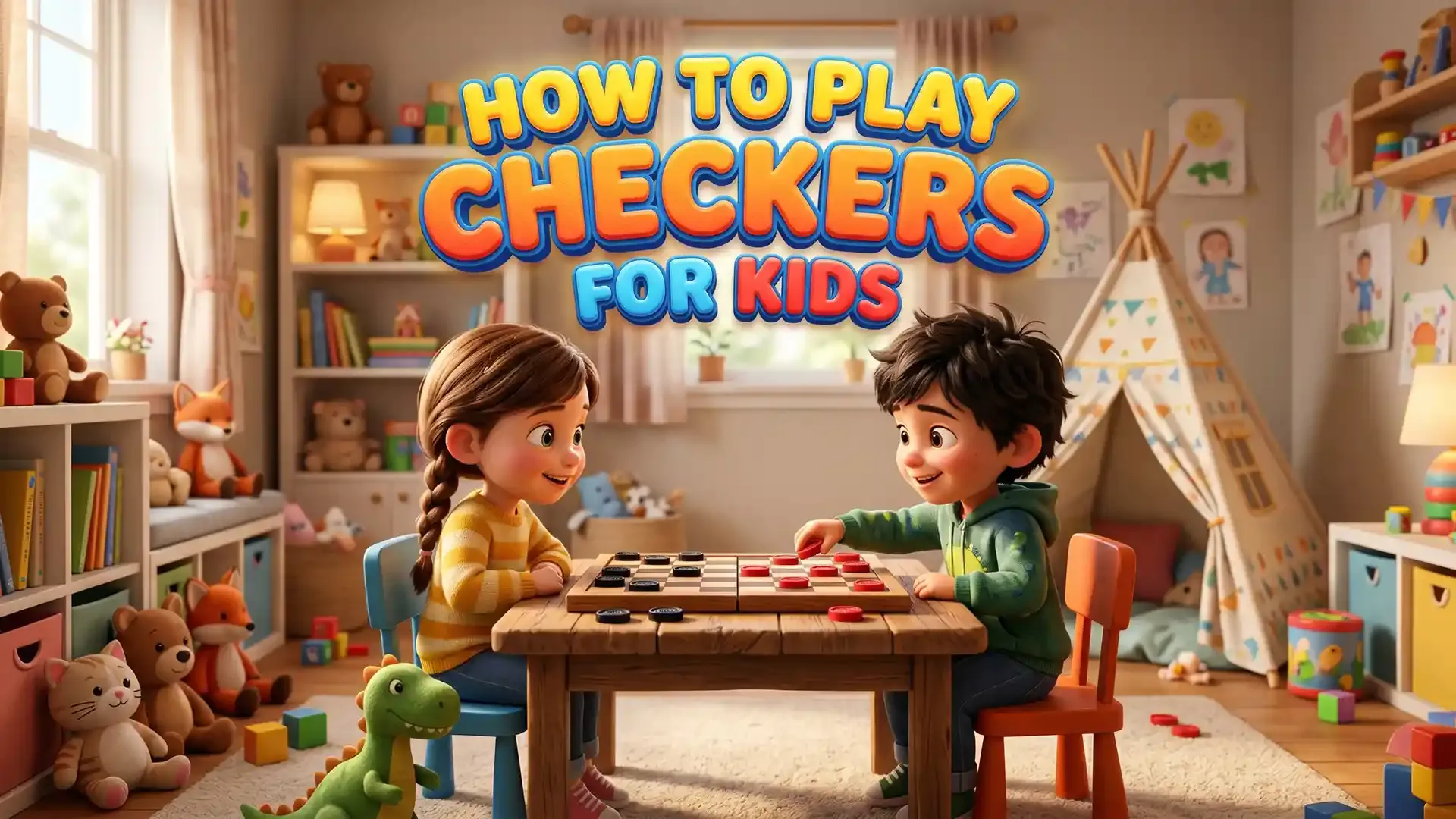
How to play Checkers for kids is one of the things many parents search for, and the answer is quite easy: you can learn it in this article, where we've put together all the details to make it easier for your kids to understand.
There are so many benefits to having your children play checkers from a very young age, because it teaches them patience, critical thinking, and life strategies, as they do on the board. It is also easy to play nowadays, as they can practice against friends at home or even play checkers online to sharpen their skills anytime.
Table of contents
What You Need to Play Checkers
There's no need to invest in expensive gear. To get ready for a match, learning how do to play checkers with basic materials is incredibly simple, as a standard setup consists of just two items.
- The Checkerboard consists of an 8x8 grid with 64 alternating black and red squares.
- Each player has 12 discs, one set red and the other black.
If you lack a real board, just draw a grid on paper and use coins or buttons as pieces. It’s super easy.
How to Set Up the Checkerboard
To start playing checkers, setting up the game right is key. Follow these basic steps:
- Orient the board: Set the board between the two players. Each player's bottom right square nearest the player should be light. Keep in mind: "Light on the right.
- Identify the active squares: In the basic game, movement occurs exclusively on specific spaces. If you look at a standard chess board vs checkers board, you will notice they share the identical 8x8 grid structure, but checkers only utilizes the dark squares while the light squares remain completely blank.
- You put the pieces on the dark squares first. They go in the three rows to you on the checkerboard.
- The player with the pieces places their 12 pieces on the dark squares near their side of the board.
- Now, the middle of the board should have two rows. The black pieces and the red pieces are on either side of these rows. This is where the game really starts to happen with the pieces.
How to Play Checkers for Kids Step by Step
In checkers, players take turns, but the player with the black pieces goes first.
How Pieces Move
At the beginning, all pieces are regular checkers. They follow certain movement checkers rules:
- Each piece moves diagonally forward, one at a time, onto an empty dark square. Movement backward or sideways isn't allowed; they hop off the squares they come from.
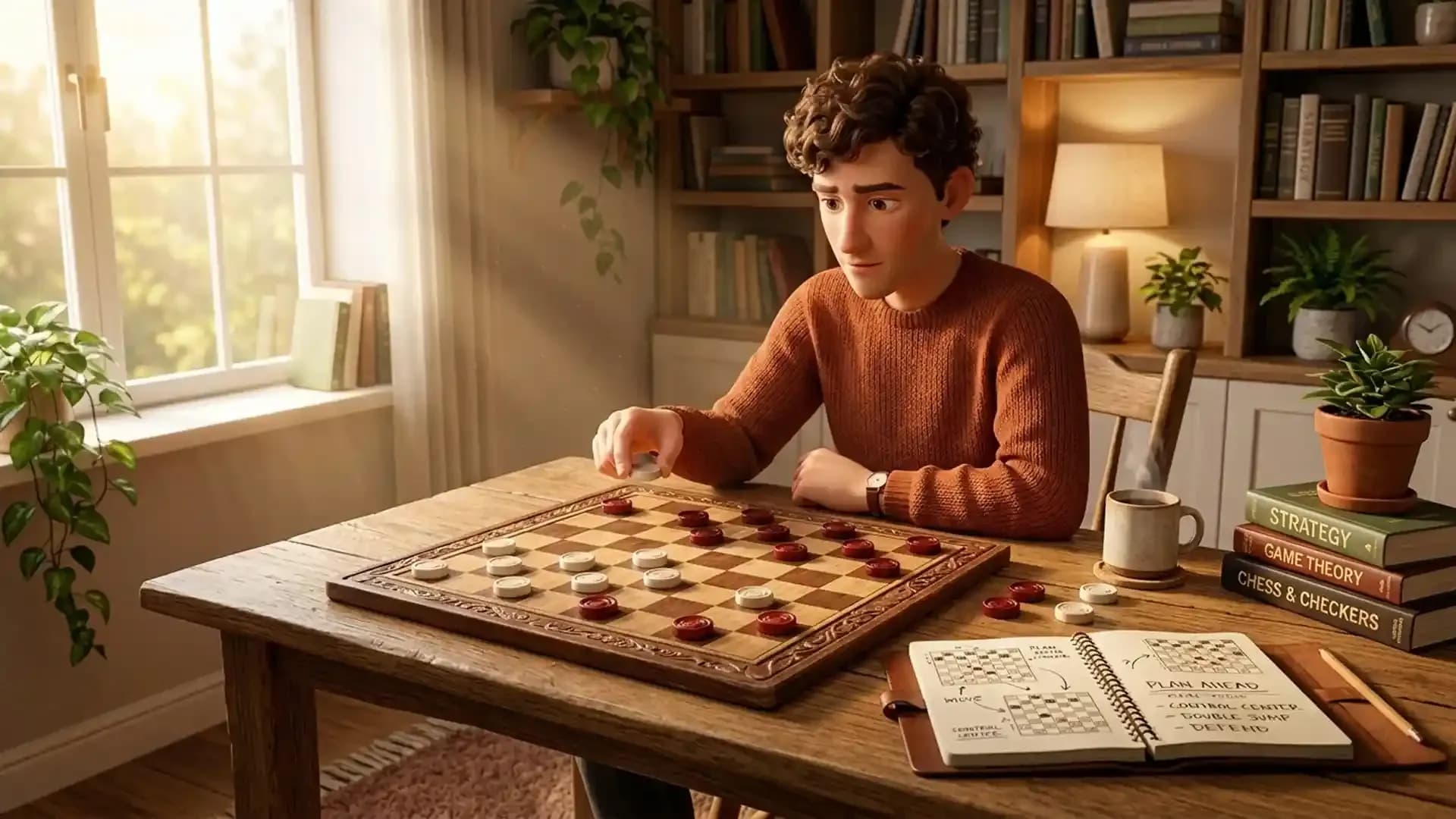
Knowing the rules in checkers is crucial for doing well. Keeping your pieces on smart diagonals makes it tough for your foe to snag them, so think wisely before placing any checker. Thinking a few moves ahead like this is part of what checkers teaches you about planning, a skill that helps far beyond the board.
How to Jump and Capture
You capture enemy checkers by jumping over them. This clears the board and weakens your opponent's army.
- The Basic Jump: when an enemy piece sits in the diagonal space right in front of yours, and the spot behind them is open, you've gotta jump. You land there, and then, ta-da, you get to take their piece.
- Forced Jumps: If a jump is available on your turn, you must take it. You cannot choose a regular move instead.
- Multiple Jumps: If you land after a jump and can immediately jump another enemy piece, you keep going. This allows you to chain together massive combinations, and yes, you can execute a triple jump in checkers during a single turn if the path is entirely clear.
What Is a King?
When a regular piece moves to the final row on the opposite side, called King's Row, it wins the game. To create a double-decker checker, just stack a captured piece right on top of another one. The captured piece used for stacking is one reason tracking how many pieces in checkers remain on the board at any point matters more than most beginners realize.
Kings are incredibly powerful because they break standard rules:
- Kings can move and jump diagonally in both directions.
- They still move one square at a time or execute standard jumps, but their multi-directional movement makes them excellent weapons.
How to Win at Checkers
The ultimate goal is to completely stop your opponent from playing, and knowing how to win at checkers involves focusing on two specific victory conditions. Winning is simplest by jumping and capturing all your opponent's checkers.
One way to win is to completely trap your opponent. If they still have checkers but can't move legally, you win. This is important for players switching from other board games because, unlike those games, forcing a lock-up means you absolutely win; it doesn’t end in a draw. Practicing both victory conditions on an online checkers website helps kids quickly develop the instinct to spot a block-out win, not just a capture win.
Simple Checkers Tips for Kids
Use these clever strategies to level up your gameplay and defeat your opponents:
- Control the center: Keep your pieces toward the middle four columns. Pieces on the edges are limited and can only move along one diagonal.
- Protect your back row: Keep your four back-row pieces in place for as long as possible. This acts as a wall that prevents your opponent from crowning Kings.
- Move in teams: Do not send a single checker out alone. Move pieces in tight groups so a trailing checker can protect the one in front of it.
- Sacrifice to win: Intentionally offer up a piece for your opponent to jump if their forced landing sets up a double jump for you.
- Focus on making Kings: The player with the most Kings usually wins. Utilizing a solid checkers strategy for beginners involves guiding your checkers safely down the sides of the board early on to get crowned while avoiding high-risk trades in the center.
Common Mistakes Beginners Make
Watch for these common checkers beginner mistakes when learning how to play the game step by step:
- Forgetting to jump: Always check the entire board at the beginning of your turn for a possible forced jump.
- Moving backward too early: Regular pieces are never moved backward. Pawns are not allowed to move back after being in danger.
- Giving up the corners: If all the pieces are out of the corners early, there are open lanes to allow your opponent to get in Kings.
Conclusion
Checkers is a fun and simple game. Once you know how to set up the Checkerboard, move pieces, crown Kings, and avoid usual traps, you're good to go! Get a board and start testing out those moves.
FAQs
- Most kids grasp it between 4 and 6 years old. They're ready if they get to taking turns and can follow a simple diagonal.
- A usual game of checkers lasts 10 to 20 minutes, ideal for those with short attention spans. However, it also depends on players.
- This isn't two-player checkers; it's regular checkers. There's Chinese Checkers too, but that uses a star-shaped board for up to six players, and it's pretty different.
- It's the same game. In North America, "checkers" is the term used, whereas "Draughts" (pronounced drafts) is the traditional name in the United Kingdom.
Physical Board vs. Digital Checkers: Does the Classic Feel Get Lost Online?
US vs UK: Which Country Really Loves Checkers? (Checkers vs Draughts, Explained)
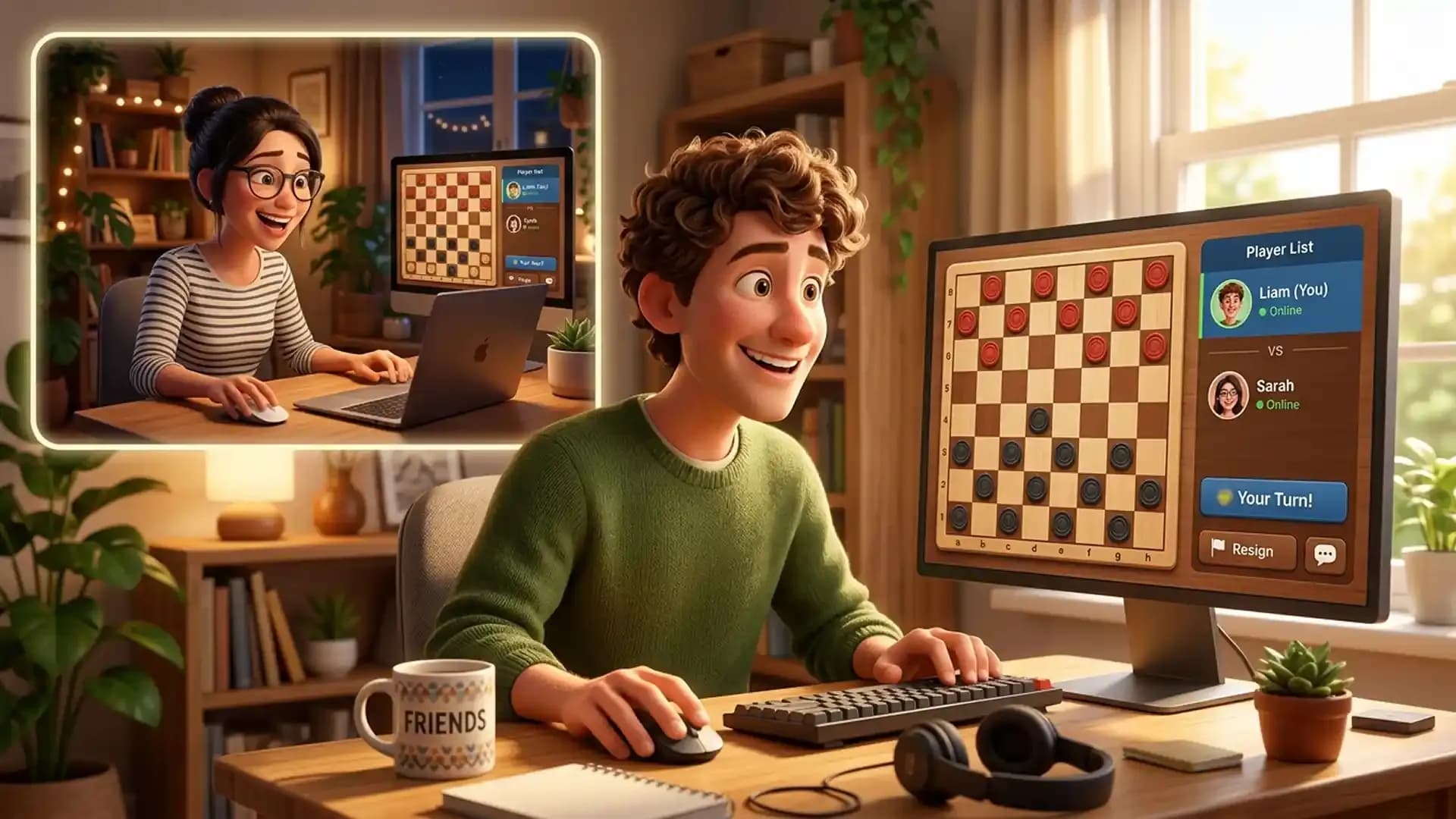
Enjoy Free Multiplayer Checkers with Friends Online
What Checkers Teaches You: Skills Beyond the Board
The Psychology of Checkers: Why This Simple Game Plays Mind Games