


Checkers vs Chess: Key Differences, Rules, and Which to Play


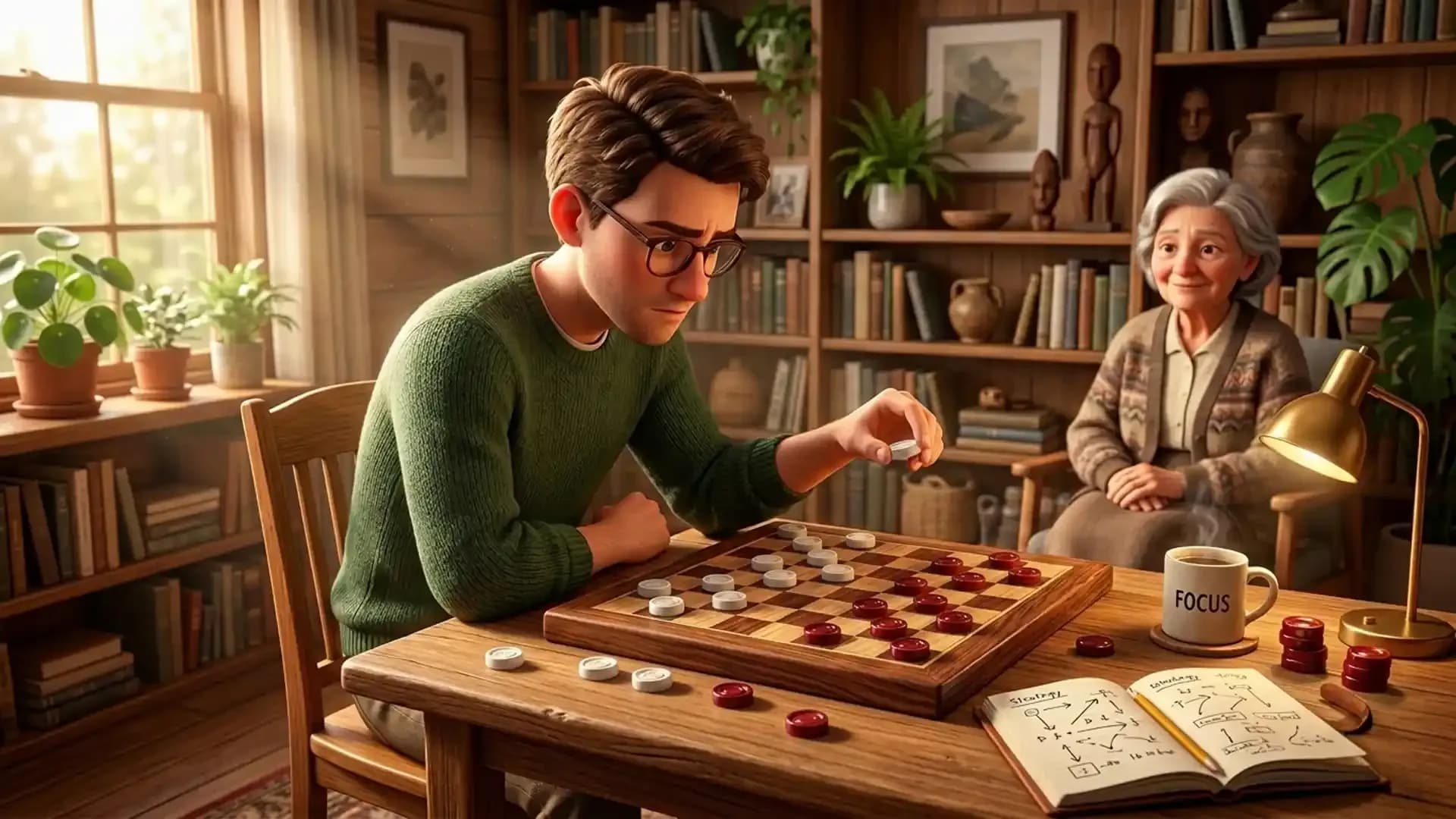
The checkers vs chess debate has been going on for some time, and there are reasons for that. Both games need to be played against an opponent, and it has been a two-player game when playing on the board, but you can play these games alone when playing them online. Both games are strategy-based, which helps your brain develop more, and both have a long history.
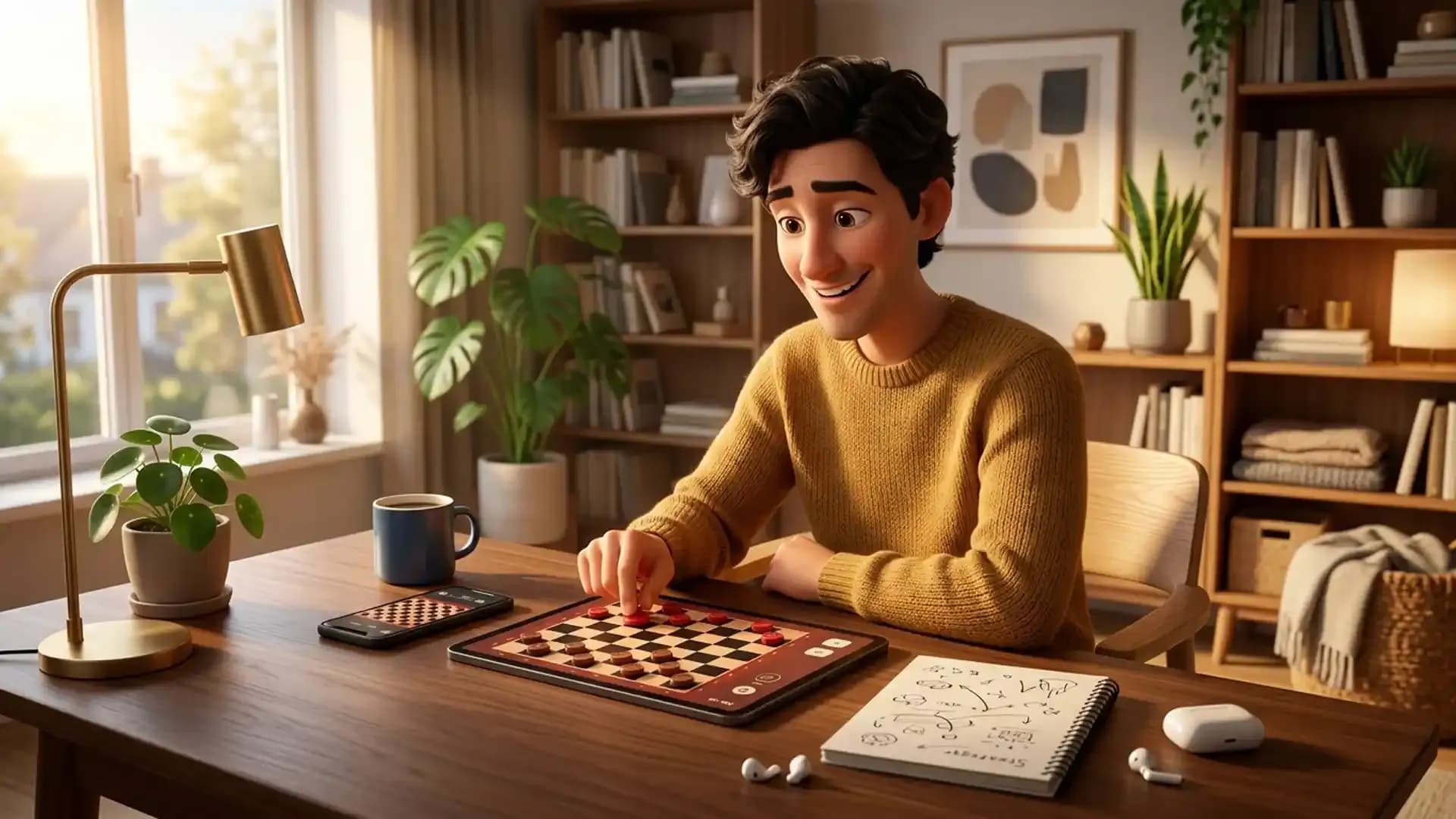
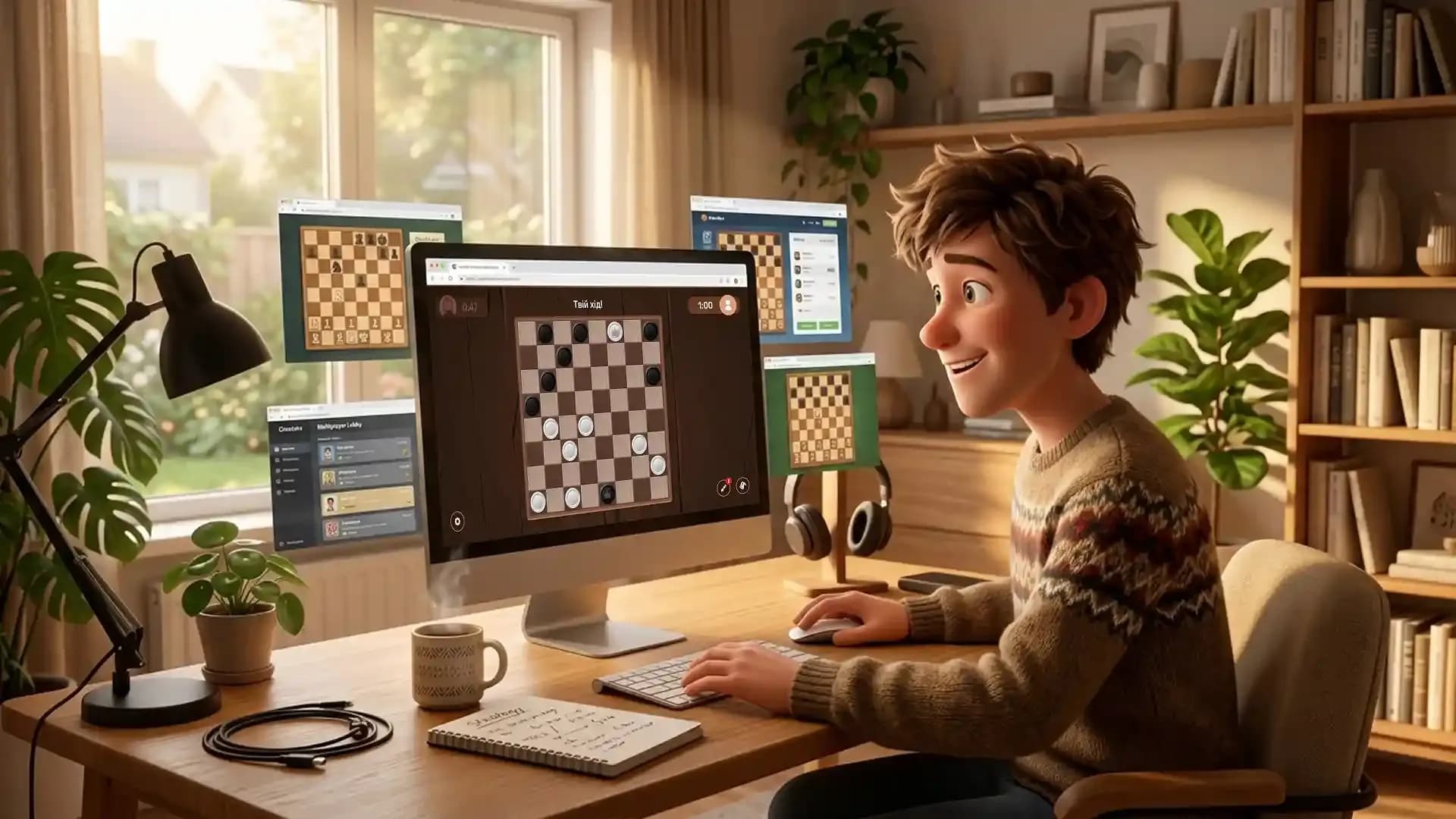
If you played any of the games on the board, you will find it much better to play checkers online on many websites or apps. It also has advantages, which we will discuss in the article alongside the fundamentals.
Table of contents
Checkers vs Chess: Quick Comparison
| Feature | Checkers | Chess |
| Board Size | 8x8 grid | 8x8 grid |
| Pieces Per Player | 12 | 16 |
| Piece Types | 1 (King after promotion) | 6 unique types |
| How Pieces Move | Diagonal only | Depends on the piece |
| How You Capture | Jump over the opponent | Move onto their square |
| Main Goal | Capture all pieces or block all moves | Checkmate the King |
| Has It Been Solved | Yes, always a draw with perfect play | No |
What Is the Difference Between Chess and Checkers?

The difference between chess and checkers is quite significant, even though both are strategic games, and you need to learn the basics to play this game.
When you play checkers, remember that every piece does the same thing. It moves one square diagonally forward or jumps over the opponent's piece if there is a chance to eliminate the opponent's piece. Your piece can gain the power of the king if it reaches the last square of your opponent's side. Checkers rules and Chess rules are quite different, too, but the fundamentals are a bit similar.
A King can move backward, too, which is the only real change in the whole game. Most people pick this up in a single sitting.
Chess is a completely different world. There are six different kinds of game pieces, each of which moves differently. The rook always moves in straight lines, while the bishop moves diagonally. The knight moves in an “L” shape over other pieces, while the queen can move almost anywhere.
Putting all of that together against a thinking opponent takes real time to develop. However, when it comes to deciding which is harder, chess vs checkers for beginners poses this question due to the complexities associated with each move and the numerous strategies that must be used during play. Due to its simplicity, it takes minutes to learn how to play, while chess can take a lifetime. This contrast is exactly why many beginners start wondering is checkers harder than chess once they experience both games.
Chess Board vs Checkers Board: Are They the Same?
The answer to this question is yes because both boards look exactly the same. They have an 8-by-8 board, with 64 spaces alternating between light and dark colors.
The difference is in how each game uses that board. Checkers only plays on the dark squares so 32 of the 64 sit completely unused the whole game. Chess uses every single square across both colors. Knowing how to win checkers every time starts with understanding this limited playing field and using those 32 dark squares more cleverly than your opponent.
The Pieces: The Biggest Difference Between Checkers and Chess

Checkers gives you 12 identical discs that all move the same way until one earns a promotion to King. One movement style, one capture method, one upgrade. Straightforward.
In chess, you have 16 pieces across six completely different types. Here is what each one does:
| Piece | How It Moves |
| Pawn | Forward one square, captures diagonally |
| Rook | Any distance in a straight line |
| Knight | L shape, can jump over other pieces |
| Bishop | Any distance diagonally |
| Queen | Any direction, any distance |
| King | One square in any direction |
Before any of that, though, knowing how to setup a checkers board is step one. Place 12 pieces in the squares of the dark color of the three closest rows and leave the two center rows untouched before your competitor does the exact same thing from the opposite side of the board.
History: Which Game Is Older?
For most people, the answer to this question would be chess. However, checkers have been played much longer. The history of checkers stretches back thousands of years before chess even existed.
The first variation of the game appeared in Ancient Egypt under the name of Alquerque in 3000 BCE. While the modern variant of checkers gained popularity in France only in the 12th century CE, chess emerged in 6th century CE in India under the name of Chaturanga.
One of the most common questions new players ask is are jumps mandatory in checkers, and the answer is yes. If a jump is available, you must take it. You cannot skip a capture to make a different move. That rule has been part of the game for centuries, and it is what gives checkers its sharp, forced feel.
What the Two Games Actually Share

Both games are completely luck-free. No dice, no hidden cards, everything on the board visible to both players the whole time. Winning comes entirely down to the quality of your decisions. This transparency is actually a defining trait of the oldest competitive games ever recorded, abstract strategy with no element of chance is a thread that runs through the entire history of board games, from ancient Mesopotamia to modern tournament halls.
Both reward thinking ahead. Neither game lets you coast on instinct at a serious level. Both also have moments where any move you make hurts your position. Chess calls this Zugzwang. Checkers has the exact same situations.
Many people also wonder can you draw in checkers, and yes, you can. If neither player can make progress and the position keeps repeating, the game ends as a draw. It does not happen much in casual play, but at the competitive level, it comes up regularly.
Capturing and Advanced Moves
One thing that makes checkers exciting is how captures chain together. When you jump over a piece and another capture is available from that new position, you must keep going. This is called double jumping in checkers and it can completely swing a game in a single turn.
Planning for double jumps and protecting against them is where a lot of the real strategy in checkers lives. It is best to play so that control of the center of the board is secured as quickly as possible. The moves 11-15 or 9-14 do exactly that.
Rules, Kings and Movement
Knowledge about the mechanism of the game of checkers is that when a checker arrives at the back row, it becomes a King. The movement of the King follows specific rules, which allow the King to move not only forward but also backwards diagonally.
Standard pieces cannot move backward before promotion, which is a question beginners often ask. Can you move backward in checkers before becoming a King? No. Forward only until that promotion happens. In some international versions, however, flying kings checkers changes this entirely. Kings can slide any number of squares diagonally like a bishop in chess, which dramatically shifts the endgame.
The Benefits and Variations
The brain benefits of checkers are genuinely worth mentioning. Regular play improves memory, builds focus, and develops the habit of thinking several steps ahead. These skills carry over into everyday life in ways most players notice without realising why.
There are also more types of checkers than most people know. American checkers is the standard 8x8 version. International draughts uses a 10x10 board with 20 pieces per side. Turkish draughts allows forward and sideways movement. Each version changes the feel significantly and gives experienced players something fresh to explore.
Strategy and Which Game to Play
A solid checkers strategy guide always starts with controlling the center, keeping your back row intact as long as possible, and looking for forced capture sequences before every move. At a higher level, the game includes planning piece trades, tempo control, and advanced combinations. The triple jump in checkers is one of those moments that separates experienced players from beginners. Clearing three pieces in one turn requires reading your opponent several moves ahead.
Conclusion
Now the real question. Is chess harder than checkers? Yes for most players. More piece types, more possible moves, and a much deeper body of theory to study. But the difference between chess and checkers at a competitive level is smaller than casual players think. Both require serious pattern recognition and accurate calculation under pressure.
Is checkers a solved game? Yes. A program called Chinook solved it completely in 2007, proving that perfect play always ends in a draw. Chess remains unsolved and is not going to be solved any time soon.
- Play checkers if you want something enjoyable from your very first game, with real depth beneath the surface.
- Play chess if you want a game that keeps rewarding you, no matter how much time you put in.
If you are new to both, start with checkers. Build the habit of reading the board and thinking ahead. Those skills carry straight into chess when you are ready.
FAQs
- Piece variety and movement. Checkers uses only one type of piece on dark squares. Chess uses six different types across all 64 squares, with completely different movement rules for each.
- Chess is harder for most people. More to learn, more to manage, more possible positions. Competitive checkers is still no easy game, though, especially since computers have fully solved it.
- Yes. The boards are identical in size. Use your checkers pieces on the dark squares, and you are ready immediately.
- Checkers by about 3,500 years. Ancient versions date to 3000 BCE in Egypt, while chess first appeared around 600 CE in India.
- Yes. Chinook solved it in 2007, proving that perfect play always ends in a draw. Chess remains unsolved.
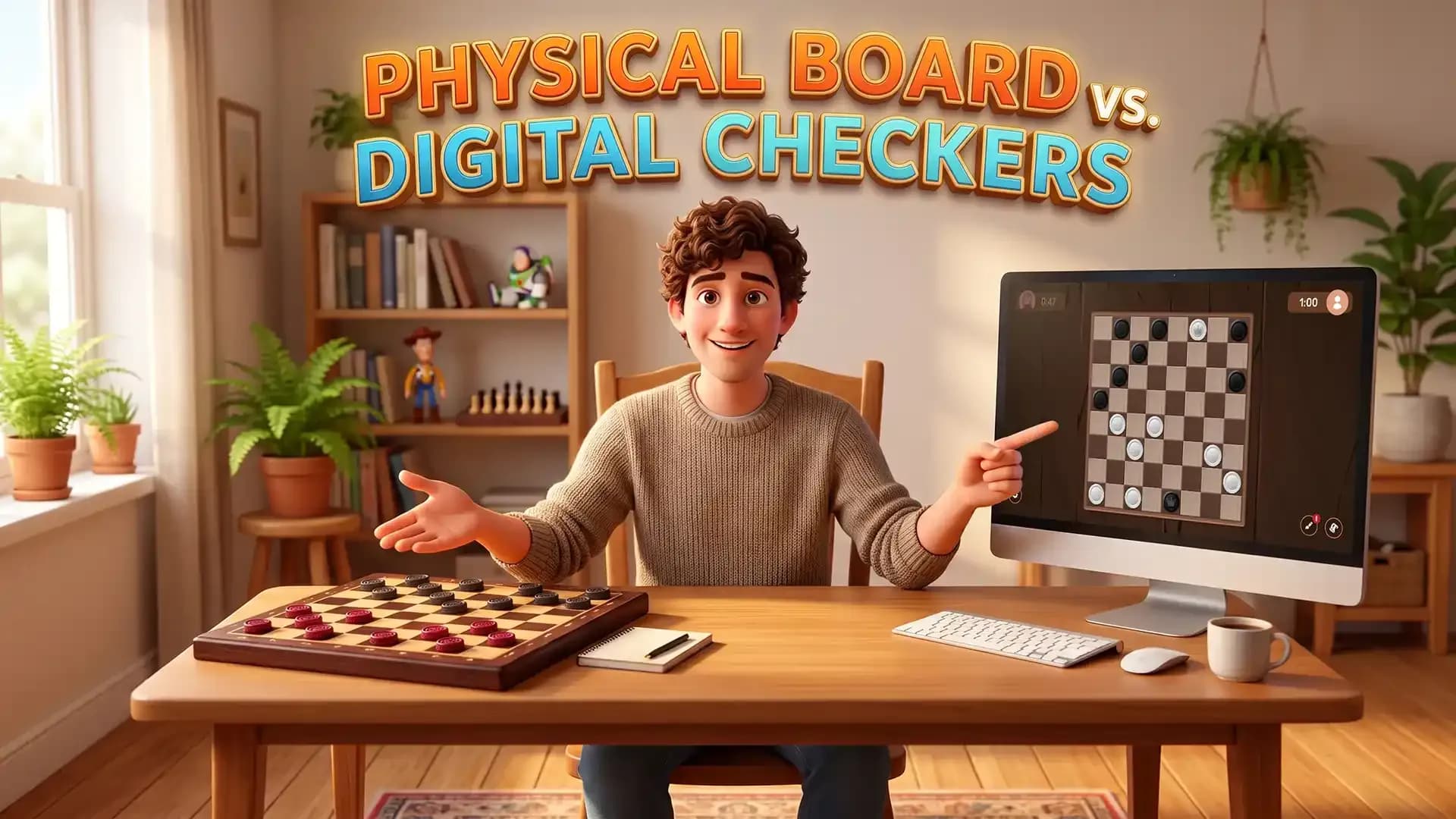
Physical Board vs. Digital Checkers: Does the Classic Feel Get Lost Online?
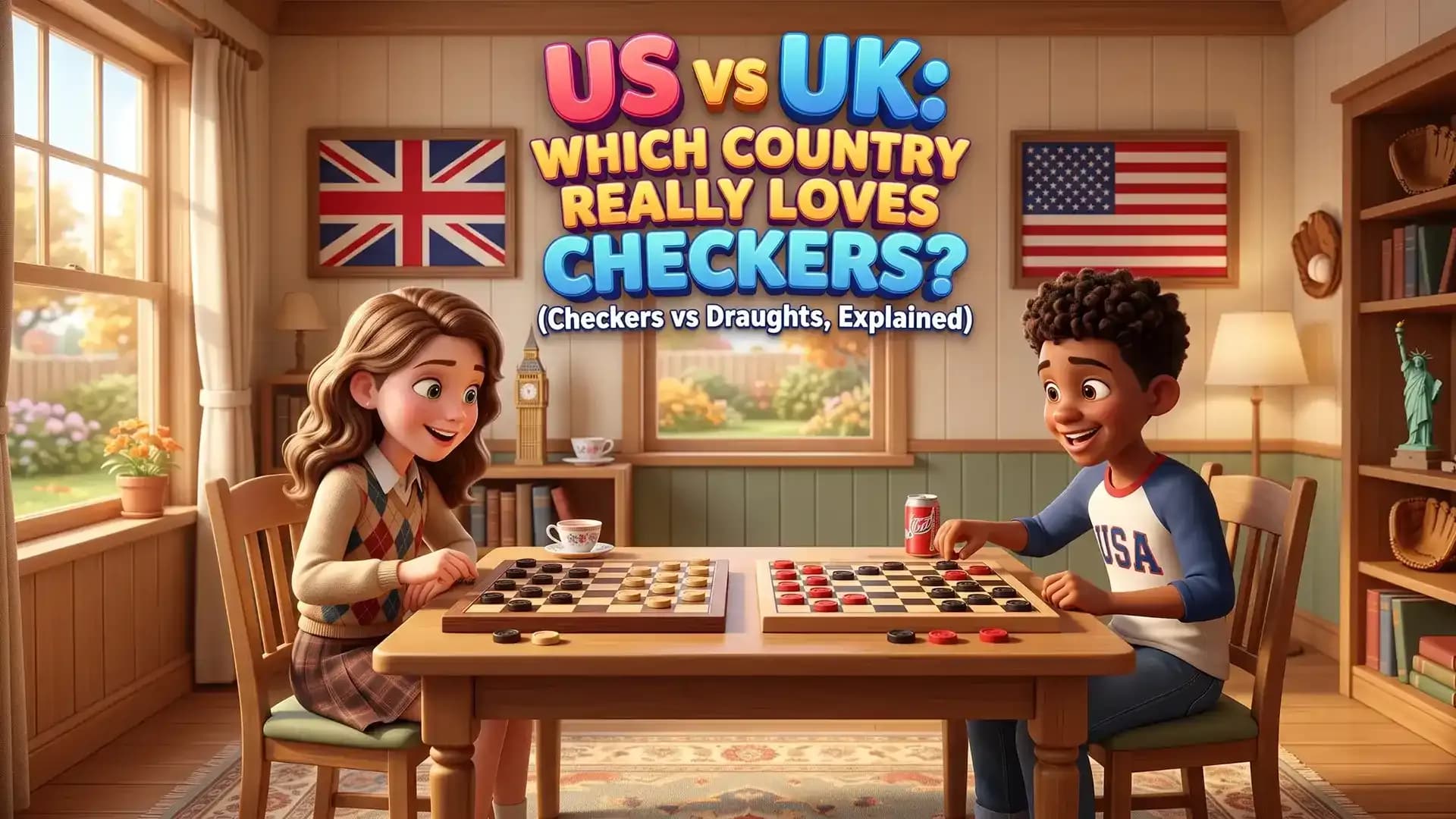
US vs UK: Which Country Really Loves Checkers? (Checkers vs Draughts, Explained)
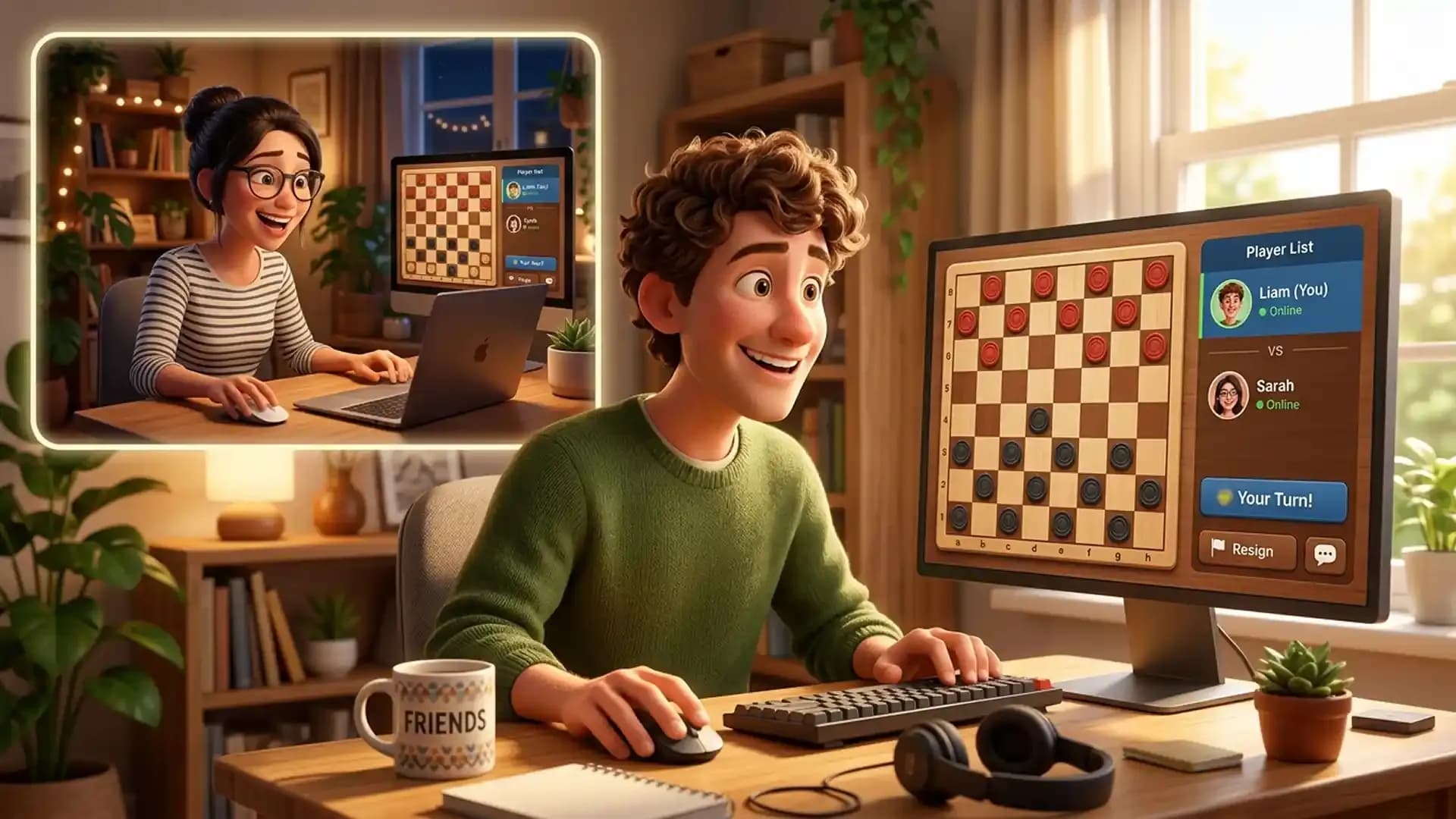
Enjoy Free Multiplayer Checkers with Friends Online
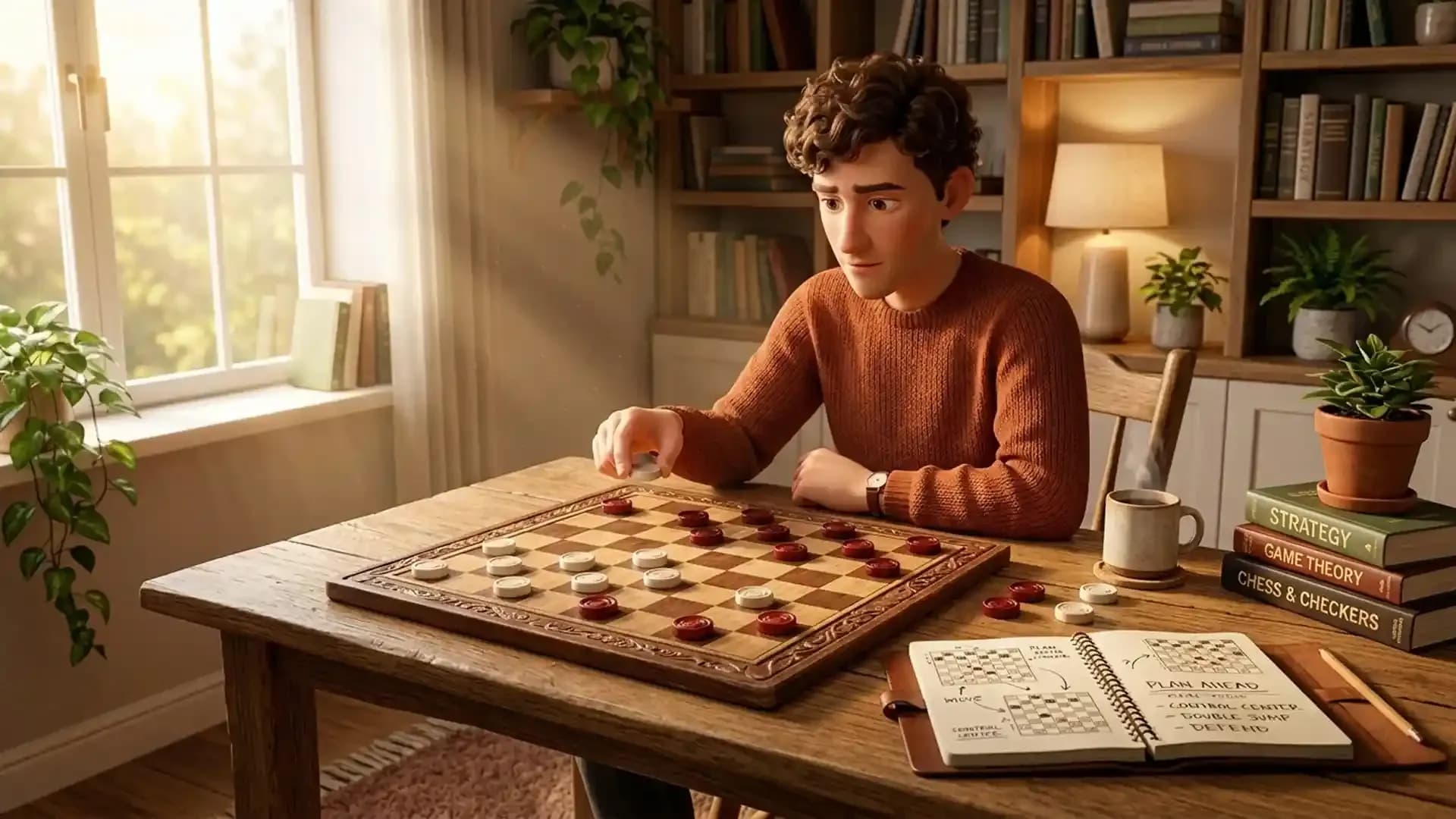
What Checkers Teaches You: Skills Beyond the Board
The Psychology of Checkers: Why This Simple Game Plays Mind Games