


The Psychology of Checkers: Why This Simple Game Plays Mind Games

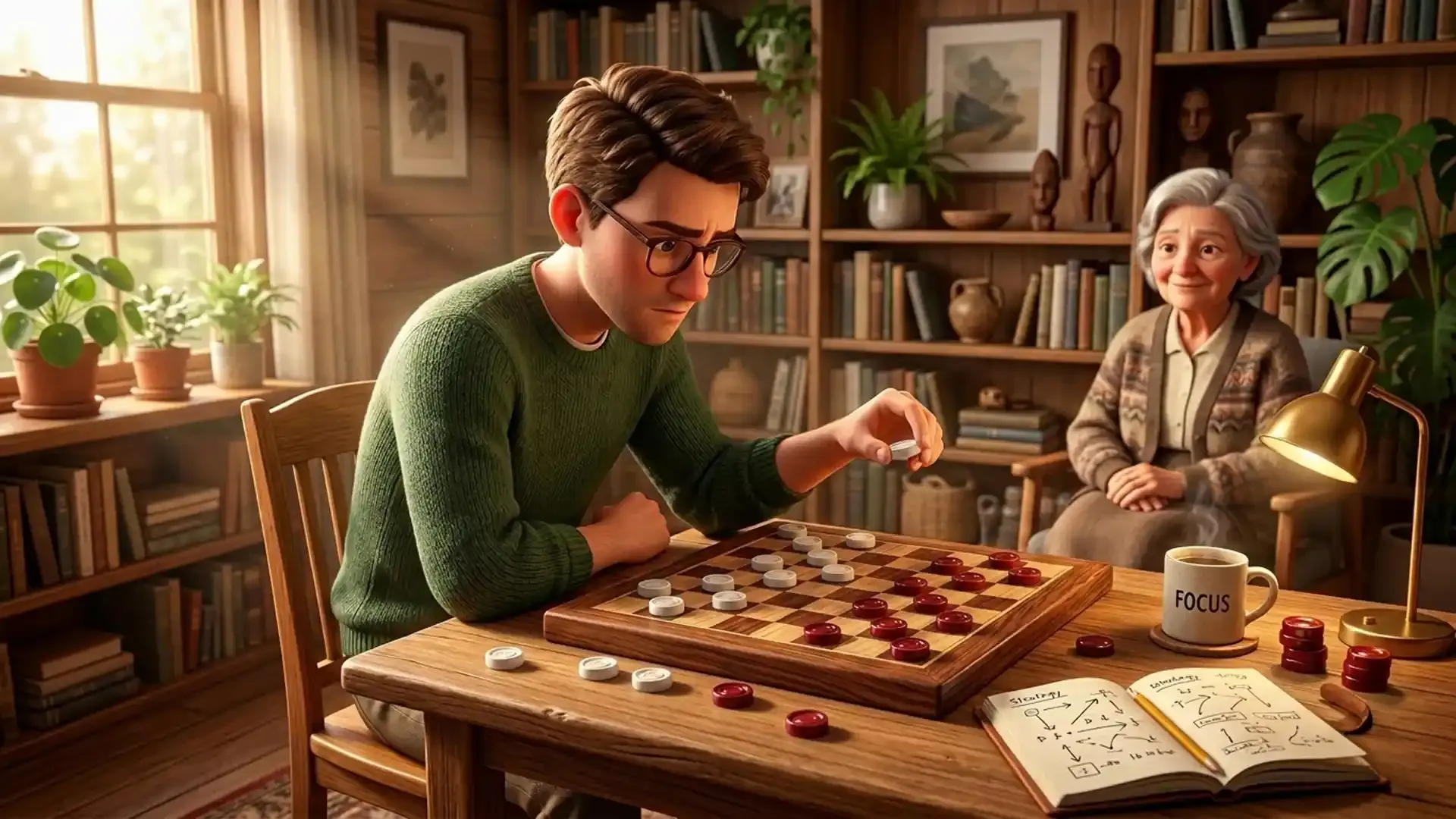
The psychology of checkers is one of the core components of the game, thanks to which you may either rule the game or lose it.
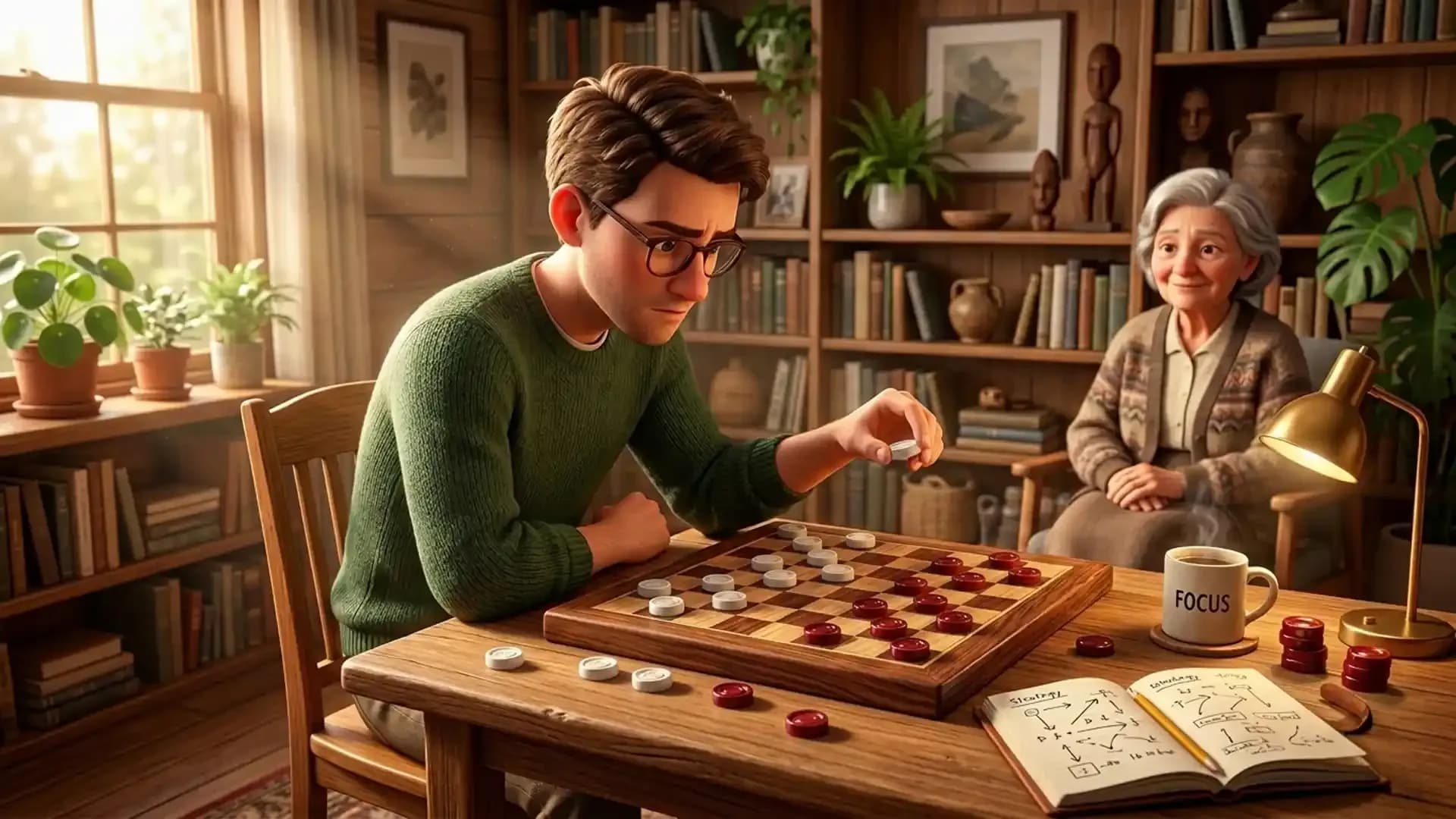
It seems that checkers is a very simple game. But for those who play this game both online and offline, they know how much mental tension this game causes. From the lengthy silences to the quick second thoughts and even the short moment of catching someone in a trap are signs of something deeper, and that something is the psychology of checkers, which means that the game is not just about defeating your opponent, but also about fighting your own psychological instincts.
This psychological tension is exactly what makes it so intense when you play checkers online, as you must read your opponent's timing and strategy without ever seeing their face.
Table of contents
Decision-Making Under Pressure
Even in a casual digital match, a tight checkerboard position triggers authentic psychological pressure responses. Your heartbeat will pick up, a flash of uncertainty or even fear will occur, resulting in a mistake made without any outside influence. The mind does not recognize that there is no immediate threat in chess, and the stakes of the game are not the same as those of a life-or-death situation. As your pieces get trapped, your sympathetic nervous system views the threat as the loss of resources.
Due to this mental pressure, chess players often fall into a vicious cycle of either overanalyzing their moves even when there is no reason to for so or taking hasty actions out of fear. Managing this specific type of pressure requires deep cognitive control, forcing you to maintain objective clarity when everything feels compromised, just like a grandmaster carefully calculating the best first move in checkers to set the tone for the entire match.
The Emotional Arc of a Game
A single match of checkers offers a condensed masterclass in emotional regulation. Every game follows a distinct psychological arc that can radically alter your decision-making quality based on your mood:
- The Setup Phase: A wave of optimism and control as you deploy your opening strategy.
- The Mid-Game Clashes: Brief dopamine hits from successful captures, immediately followed by the sudden sting of a counter-trap.
- The Endgame: The exhausting grind of trying to crown a king while defending a thinning defensive line.
How you navigate these emotional swings dictates whether you win or lose. When a player suffers an unexpected loss of a piece, they often fall into a state known as tilt. This is a poker term for emotional frustration that leads to increasingly reckless decisions.
Playing rushed or angry causes you to miss blatant vulnerabilities, turning a minor setback into a total collapse. It is this intense, fast-paced psychological pressure that often sparks the debate over whether is checkers better than chess for developing quick emotional resilience, as a single emotional mistake on the board can cause your entire defense to unravel in an instant.
Reading Your Opponent (Even Online)
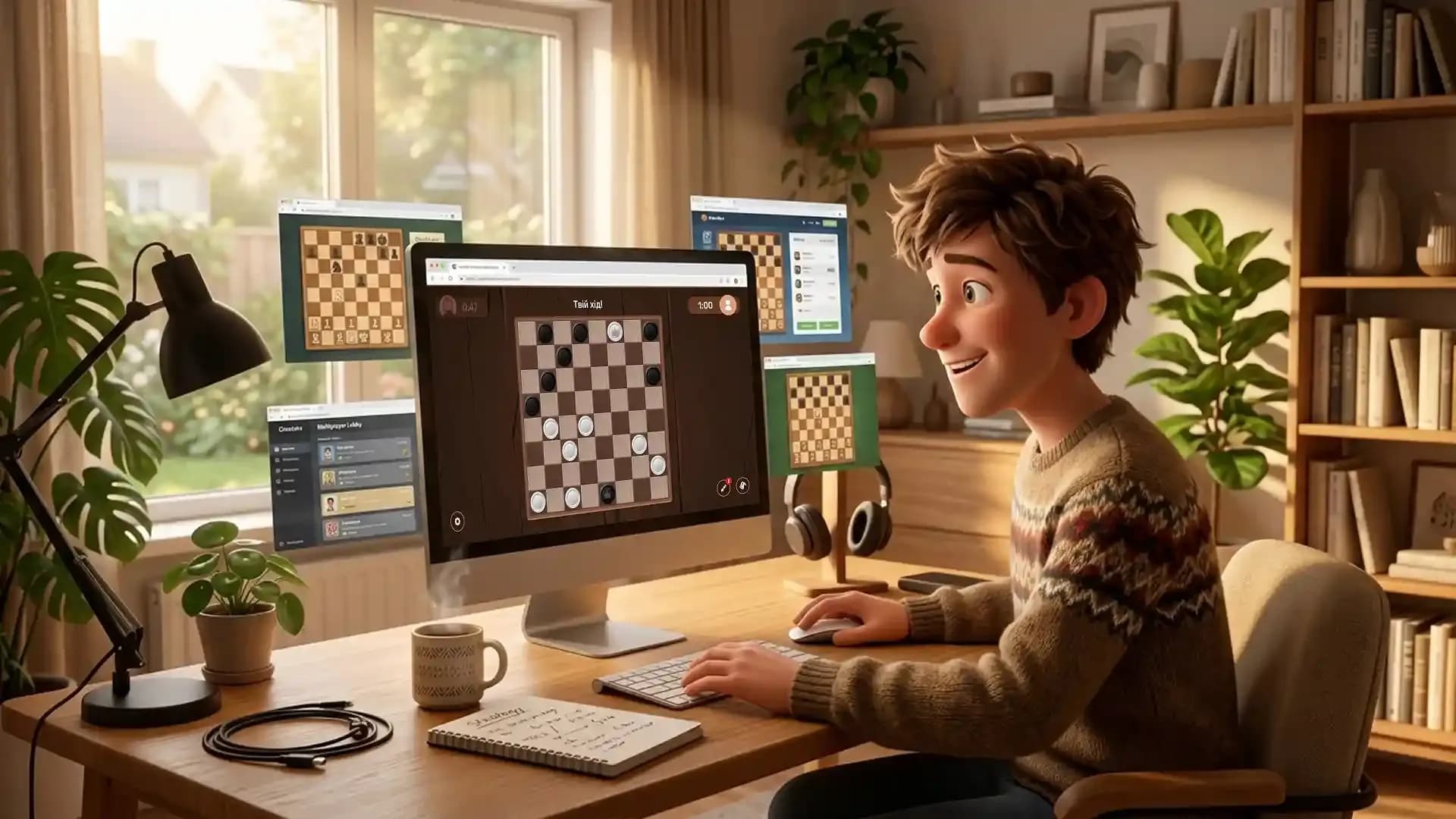
Many older articles focus heavily on face-to-face body language, looking for a trembling hand or a nervous glance across a wooden table. However, when you play in a digital environment, the nature of mind games in checkers shifts in fascinating ways. You can absolutely read your opponent online; you just have to look at data patterns instead of physical expressions. This is part of what makes it so interesting to play checkers online with friends, since you're constantly reading real reactions instead of predictable computer logic.
- Digital Tells: The most telling psychological data point in online checkers is move tempo.
When a player who has been moving instantly suddenly pauses for twenty seconds before executing a forced jump, they are broadcasting their anxiety. They have come to understand that they were wrong, and they are currently grieving the fall of their tactics. In addition, rapid and erratic clicking might also denote overconfidence and even restlessness. Through careful observation of such rhythmic patterns, one can gauge a competitor's level of confidence and make deliberate changes to one’s checkers strategy accordingly.
Flow State and Mental Focus
There is a unique cognitive phenomenon known as a flow state, a term coined by psychologists to describe a state of total absorption in which your focus narrows and time seems to distort. Because of its clean geometric lines and predictable mechanics, cultivating checkers and focus happen naturally during a match. The external world drops away as your brain enters a highly efficient state of pattern recognition, allowing you to experience the mental benefits of checkers firsthand.
This particular experience has a lot to do with how mindfulness operates when playing checkers. This is unlike any of today’s video games, which come packed with all kinds of sensory stimuli, such as flashy visuals and sound effects. Checkers gives you a minimalist mental playground. You need a focused presence of mind, which works like meditation, bringing down stress levels through focused working memory. It's a quiet but powerful reminder of what checkers teaches you about training attention itself, not just the moves you make on the board.
Luck, Skill, and How You Handle Both
From a pure mathematical standpoint, checkers features zero hidden information and absolutely no inherent luck. There are no dice to roll and no random cards to draw. Yet human error and unpredictable opening choices often create moments that feel like either lucky breaks or devastating strokes of bad fortune. Mastering how to win checkers depends heavily on how a player responds to these moments, which reveals a lot about their psychological locus of control:
| Player Response Style | Interpretation of the Game | Long-Term Psychological Outcome |
|---|---|---|
| External Defensiveness | Blames "bad luck" or a glitching screen when an opponent spots a brilliant double-jump. | High frustration, slow skill development, and repeated strategic mistakes. |
| Internal Accountability | Recognizes that an opponent's "lucky" break was actually caused by their own loose defense. | High emotional resilience, fast learning curves, and improved checkers skills and patience. |
Why the Mental Side Is Worth Paying Attention To
It all comes down to the psychological component of the game, which makes the difference between the casual player and the real strategic genius. Checkers is as rewarding for those players who are good at recognizing their own psychological weaknesses as it is for those good at abstract visualization. The ability to recognize your own trigger points will immediately give you an advantage.
When you learn to manage your own internal state, you stop fighting your own mind and can focus entirely on dismantling your opponent's position. This deep mental battle is not a modern phenomenon; looking back at the history of checkers, players have been navigating these exact same psychological pressures for thousands of years. If you want to dive deeper into how practicing these mental habits reshapes your overall cognitive development, take a look at our comprehensive guide on the educational benefits and how checkers builds critical thinking skills.
Experience It Yourself
The absolute best way to understand these psychological dynamics is to experience them firsthand. Take notice of your breath the next time you get locked into a tight endgame, and see if you can spot the exact moment your opponent starts to panic based on the speed of their moves.
FAQs
- There is an inherent response in our brains when playing games, driven by the psychological aspects of competition and failure, irrespective of the material gain involved.
- This is a state of deep concentration in which you focus entirely on the board; any distracting thoughts disappear, and time changes its perception because your working memory is fully occupied.
- Yes. While you cannot see physical body language, you can read digital tells like move tempo, sudden hesitations before forced moves, and erratic pacing changes that clearly signal confidence or panic.
- This is completely based on skill, with no luck factor. There will, however, be unforeseen occurrences caused by human error, which players tend to consider as fortune.
- Many players find the game highly meditative. The minimalist visual design, clear rules, and requirement for sustained attention naturally encourage a calm, present-moment focus that clears out mental clutter.
Physical Board vs. Digital Checkers: Does the Classic Feel Get Lost Online?
US vs UK: Which Country Really Loves Checkers? (Checkers vs Draughts, Explained)
Enjoy Free Multiplayer Checkers with Friends Online
What Checkers Teaches You: Skills Beyond the Board
The Psychology of Checkers: Why This Simple Game Plays Mind Games