


10 Checkers Beginner Mistakes That Are Costing You Every Game


It is also one of the earliest board games we play when we are young kids. The game's simplicity often leads people to think the strategy behind checkers is easy. But anyone who has ever faced an experienced player knows how quickly things can turn for the worse.
In a matter of seconds, you would become the leader, but then you would lose all your pieces one at a time in a single turn. You have to understand that most often, your opponent does not possess the qualities of a genius. He/she just keeps making the same mistakes over and over.
Here is the entire manual of all those things that must be avoided in order for you to come out victorious, and the best way to test these strategies is to play checkers online for free to sharpen your skills against real opponents.
Table of contents
Why Beginners Keep Losing at Checkers
The primary reason beginners lose is that they play reactive checkers. It is a case where they only pay attention to the current moves on the board, without considering future ones. Beginners always focus on capturing as many of their opponents' pieces as possible.
Although the capturing of pieces is a basic aspect of checkers, it is primarily a game of positioning based on space control. One cannot win checkers even if they have more pieces without controlling the required squares. Mastering this focus on the board is a key part of the benefits of playing checkers for your long-term mental growth.
10 Checkers Beginner Mistakes (And How to Fix Each One)
Mistake 1: Moving Pieces to the Edges of the Board
The most prevalent error amongst new players is assuming the board edges are safe. Beginners think that if they "hug the rails," their pieces cannot be jumped. While it is true that you cannot be jumped from the side, you are actually walking into a trap.
An edge piece has its mobility reduced by half. It is only capable of moving in a single direction and thus, it is very easy to be blocked by your opponent or put in an awkward position.
- The Fix: Prioritize central squares from your very first move. Controlling the middle of the board gives your pieces more power and more options. Avoiding this is the first step in fixing beginner checkers mistakes, especially if you want to master the best moves for checkers and stay in control of the game.
Mistake 2: Only Looking One Move Ahead
Beginners tend to keep their eyes on the piece they want to move at the moment. This is not a good tactic at all. Unless you are merely responding to the last move that your opponent has made, you will never be in a position to be ahead of him. The consequence will be that you will be exposed to simple tricks and miss chances of far-fetched catches. Thinking ahead is as much a psychological skill as a tactical one, which is exactly what The Psychology of Checkers is about.
- The Fix: You should always be able to plan two or three moves in advance whenever you move either of your pieces on the checkers board. This will assist you in reducing mistakes and increasing your chances of winning the game.
Mistake 3: Neglecting the Back Row (Kings Row)
In trying to get their attack started as soon as possible, players tend to advance all their pieces at once, thereby leaving the Kings Row completely bare early on in the game. An empty back row is like leaving your front door wide open. It allows your opponent to get a King without any effort.
- The Fix: Keep at least one or two pieces anchoring your back row during the opening. These "guards" make it much harder for your opponent to promote their pieces. Managing this area is vital to avoiding common mistakes in checkers and ensuring you understand the importance of checker board setup throughout the entire match.
Mistake 4: Capturing Every Piece You Can
In checkers, when you can jump a piece, you must do so. Novices will look at something free and grab it without considering. Nonetheless, effective players will tend to bait you. They will allow you to take one of their pieces so that they can put you in a place where they can take two of yours the next time that they roll.
- The Fix: Before you make a forced capture, check what your opponent gains from that exchange. Sometimes, giving up a piece to maintain a strong position is better than falling for a 2-for-1 trap.
Mistake 5: Playing Only One Side of the Board
Many players tend to favor one side of the board. They might cluster all their pieces on the left or right. This creates a massive imbalance. A smart opponent will notice this and launch a "fast side rush" on the empty half of the board, sailing straight through to your back row.
- The Fix: Spread your pieces across both sides. Keeping a balanced defense across the whole board is a major part of how to get better at checkers.
Mistake 6: Advancing a Single Piece Too Far
We have all done it. We see a clear path and send one lone checker deep into enemy territory. Without backup, that piece is basically a sacrifice. It will get surrounded and captured quickly because it has no "friends" to protect its back.
- The Fix: Advance your pieces in pairs or small groups. When pieces move together, they can protect each other. If one piece is threatened, the other can jump the attacker.
Mistake 7: Ignoring King Promotion
Beginner players often end up getting obsessed with moving and jumping pieces that they fail to make use of the best weapon available on the checkerboard, the King. The King not only moves and jumps backward but also possesses great powers compared to other pieces.
- The Fix: Always have a plan to get at least one piece to the other side. A strong checkers strategy for beginners always involves racing for that first King.
Mistake 8: Leaving Gaps Between Your Pieces
When your pieces are spread out with empty squares between them, you are asking for trouble. These gaps allow your opponent to perform combination attacks. They can jump through the holes in your defense and take multiple pieces in one go.
- The Fix: Keep your formation tight. Where possible, pieces ought to be near one another. A wall of spread-out checkers is easier to break than a wall of solid checkers.
Mistake 9: Not Defending Against Forced Moves
As jumping is a requirement in the game, your opponent can take advantage of your own pieces and force you to make a move that you would prefer not to.
- The Fix: Before proceeding to a forced capture, ensure you are not putting yourself at risk of it. In case your opponent can make a move that enables your opponent to throw one of your pieces at him or her and win the game, then you have to find another move.
Mistake 10: Giving Up After Losing a Piece
The number one reason beginners lose is that they quit mentally. If they lose a piece early, they assume the game is over. In reality, checkers is a game of momentum. You can be down a piece but have a much better position, which can still lead to a win.
- The Fix: Stay composed. Focus on positional control and getting a King. Often, knowing how to win at checkers just means being the more patient player.
How to Get Better at Checkers: Quick-Fix Summary
Improving at checkers does not have to take years. If you can remember to stop making these basic errors, your win rate will go up almost instantly. Use this table as a quick reminder for your next match.
| Mistake | The Fix |
|---|---|
| Hugging the edges | Move toward the center |
| One-move thinking | Plan 2–3 moves ahead |
| Empty back row | Keep 1–2 pieces back |
| Blind captures | Check what opponent gains |
| One-sided play | Use both sides of the board |
| Solo piece rushes | Advance in pairs |
| Skipping promotion | Aim for king quickly |
| Gaps in formation | Keep pieces connected |
| Ignoring forced moves | Watch for traps |
| Quitting mentally | Stay focused and fight |
With these beginner tips on playing checkers, you will be playing on equal footing with the rest and not a casualty. Your friends are consistent and patient, but once you understand the rules of checkers inside and out, you will have a massive edge in every match you play.
FAQs
- The most common mistake in checkers is leaving pieces unprotected, which allows opponents to capture them easily. Many beginners also ignore forced captures, miss opportunities to create multiple jumps, or fail to plan ahead. These errors often lead to losing material and control of the board.
- There is no quicker way than learning to look two moves ahead. You will learn how to read your opponents' minds in an attempt to play against their moves and not fall into simple tricks.
- The rules of the game are quite straightforward and can be learned in minutes. On the other hand, its tactics are complex.
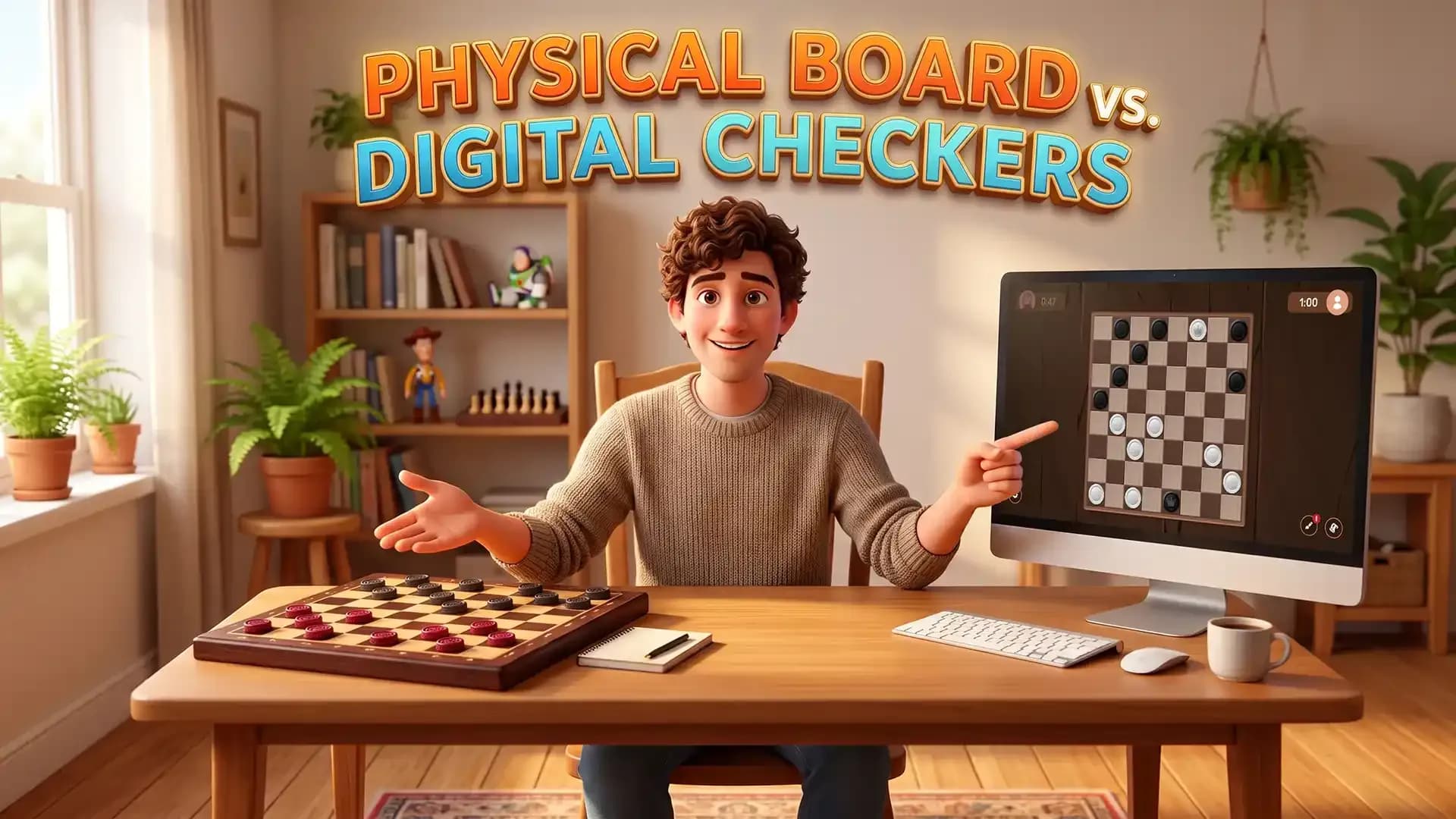
Physical Board vs. Digital Checkers: Does the Classic Feel Get Lost Online?
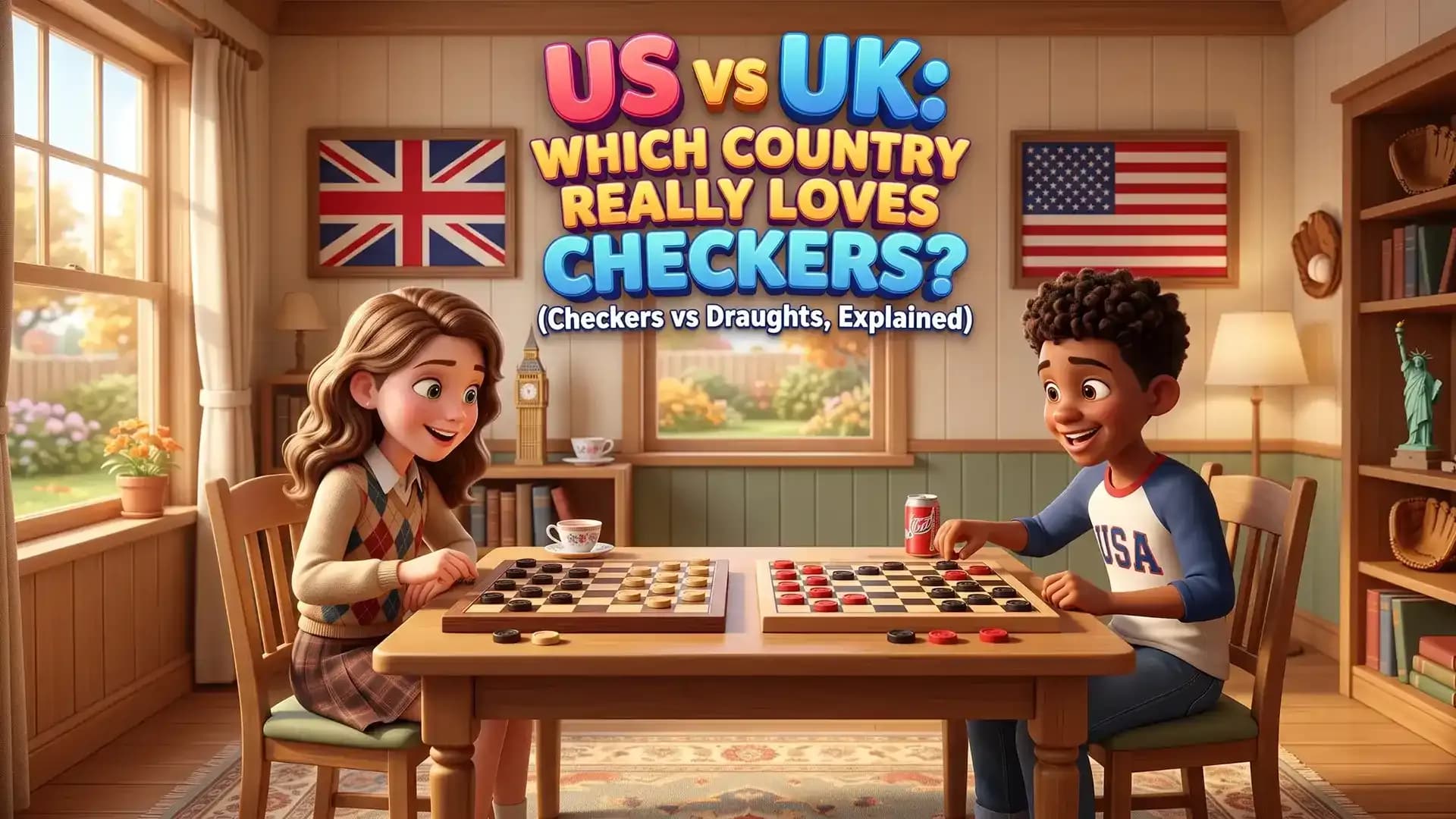
US vs UK: Which Country Really Loves Checkers? (Checkers vs Draughts, Explained)
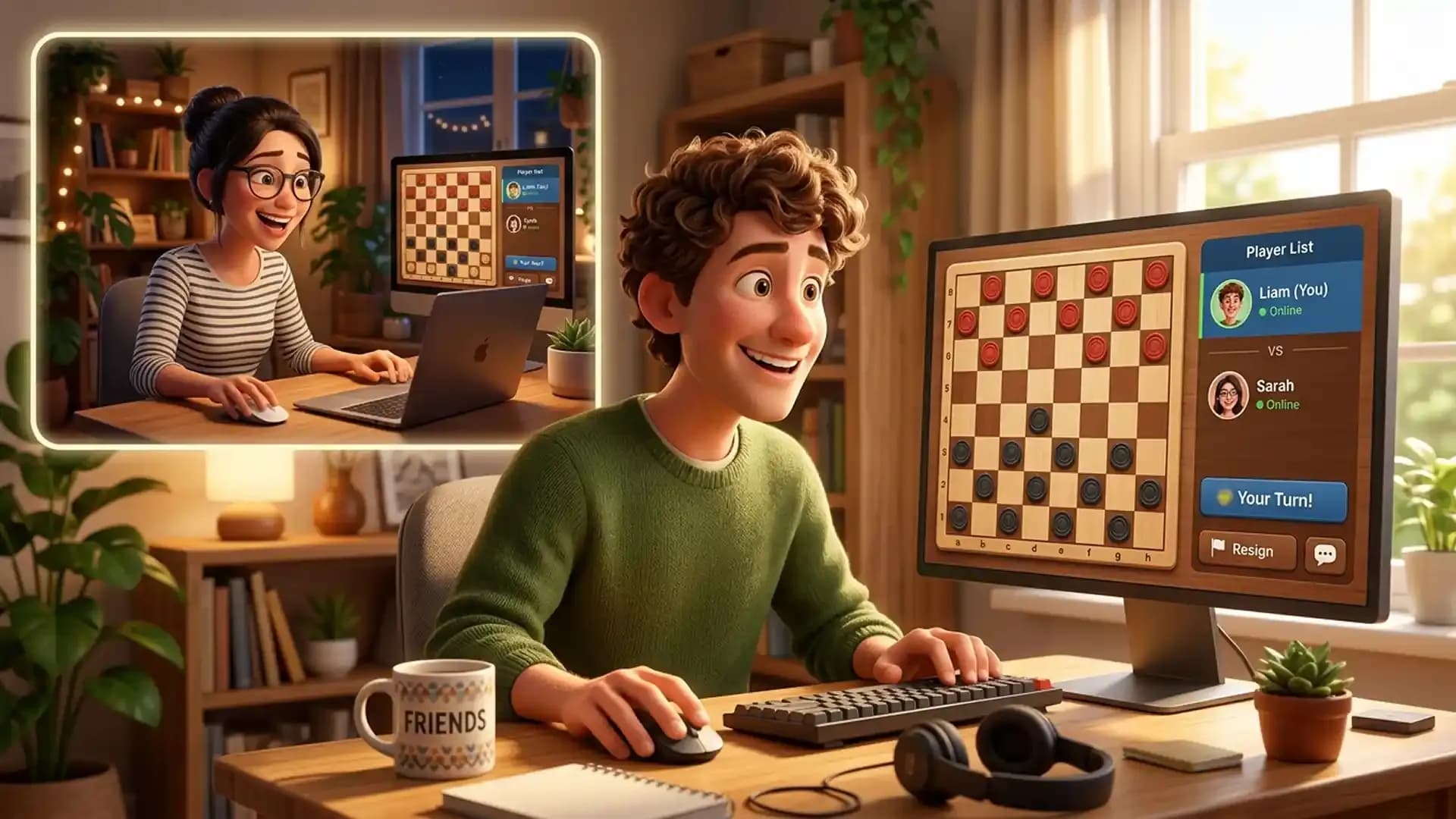
Enjoy Free Multiplayer Checkers with Friends Online
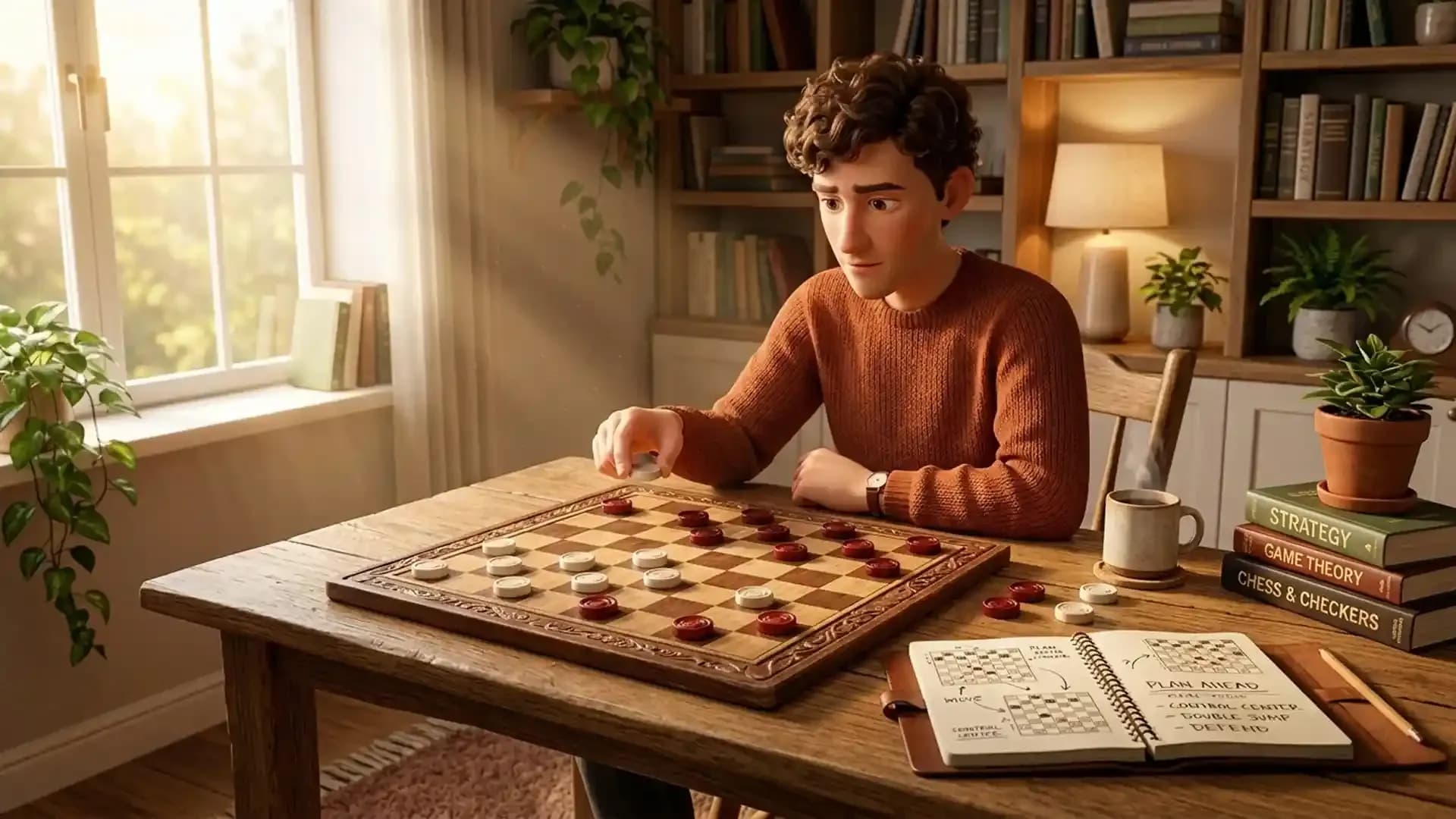
What Checkers Teaches You: Skills Beyond the Board
The Psychology of Checkers: Why This Simple Game Plays Mind Games