

Patt beim Damespiel: Beendet es die Partie?

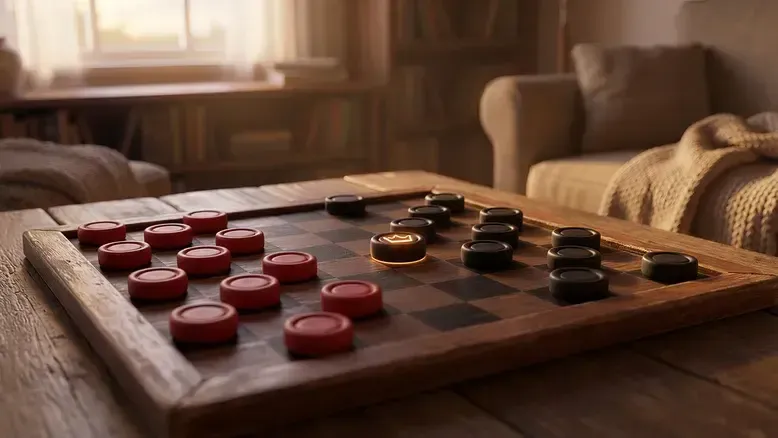
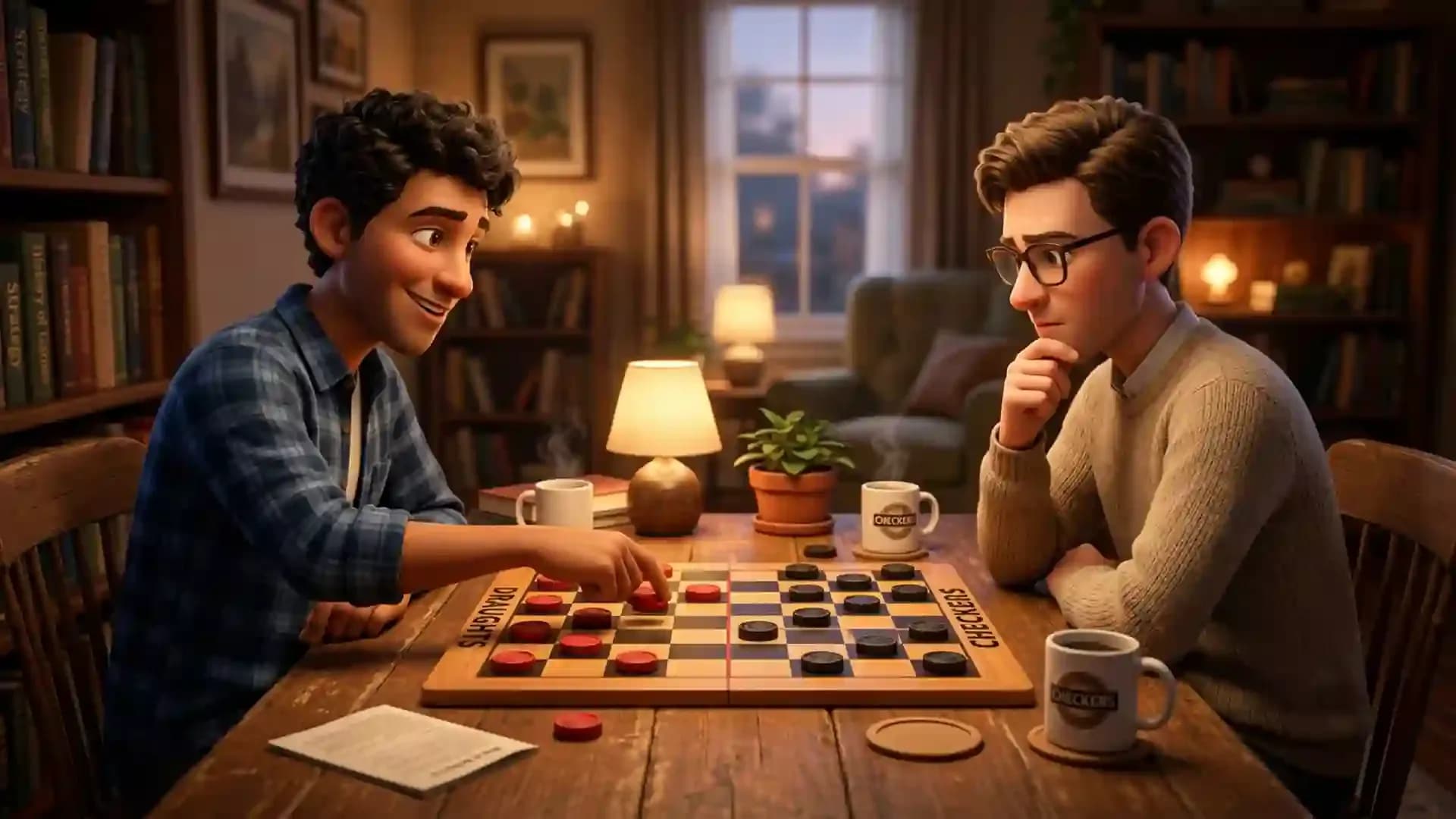
Ein Patt beim Damespiel ist eine Situation, in der ein Spieler während seines Zuges keinen einzigen regelkonformen Zug ausführen kann. Gemäß den meisten offiziellen Regelwerken verliert ein solcher Spieler die Partie. Dies steht im Gegensatz zum Schachspiel, wo ein Patt häufig zu einem Unentschieden führt.
Ein Patt ist beim Damespiel eher selten, da das Spielbrett vergleichsweise eng ist und das Schlagen von Steinen häufig vorkommt. Es erfordert eine hervorragende räumliche Positionierung und eine solide Kontrolle des Bretts, um den Gegner in eine derart ausweglose Bedrängnis zu bringen.
Wenn Sie anfangen, offline oder online Dame zu spielen, lernen Sie, wie man im Spiel ein Patt erzielt, da dies ein fairer Teil des Spiels ist.
Inhaltsverzeichnis
- What Is a Stalemate in Checkers?
- Official Rules About Stalemate in Checkers
- Does Stalemate End the Game in Checkers?
- Checkers Stalemate vs Draw: What Is the Difference?
- Can You Draw in Checkers?
- Is Stalemate Common in Checkers?
- Strategic Tips to Avoid Stalemate in Checkers
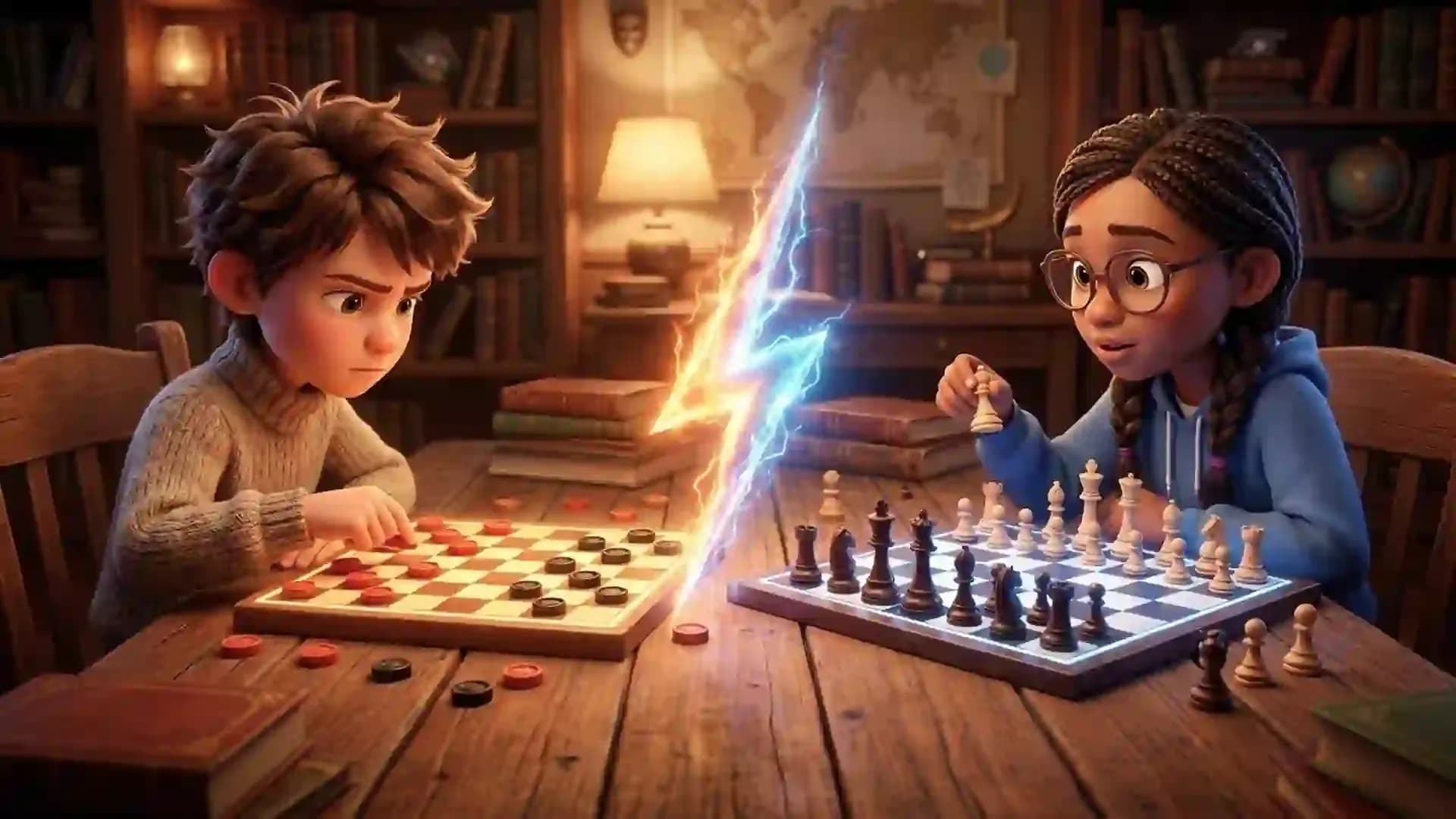
- Stalemate in Checkers vs Chess
- Conclusion
What Is a Stalemate in Checkers?

The checkers draw happens when a player has at least one piece remaining on the board, but is unable to make a valid move on his or her own turn. Under the usual rules of American checkers, the said player will have lost the game. According to official checkers rules, being unable to move on your turn means the game is over.
The simple rule is that, in a person's turn, if there is no access to a diagonal move, moving backward as a king, or capturing the opponent's piece, the game ends and the player loses.
This is different from losing all your pieces. In a stalemate position, your pieces are still there. They are just completely blocked.
Official Rules About Stalemate in Checkers
The official rulebooks must be consulted to determine whether a stalemate in checkers ends the game.
American Checkers Federation Rules
According to the American Checkers Federation's regulations, a player loses a game if he or she is unable to make a legitimate move on his or her turn. No draw rule applies specifically to a stalemate. When you have several pieces left with you, and you cannot take any more, you have lost the game.
International Draughts Rules
In international draughts, which is played on a 10×10 board under the rules of the World Draughts Federation (FMJD), a player who has no legal move on their turn automatically loses the game. However, international rules also define specific draw conditions, such as move limits without captures and certain balanced endgame positions. These draw rules are separate from stalemate and do not apply when a player is completely blocked.
Online Checkers Platforms
Most online checker games are played according to the conventional American rules, and if the program determines that the player has no legal move, it declares the other player the victor.
In that regard, the answer to the question of whether there is a checkers stalemate is yes. However, it is not liable to a draw.
Does Stalemate End the Game in Checkers?
Yes, the stalemate ends the game in checkers. If you are unable to move during your turn, you lose. This is the norm in most of the official formats.
Many players get confused because chess treats a stalemate as a draw. In checkers, it usually means defeat for the player who is stuck. That difference is important when learning how to win checker games consistently.
Checkers Stalemate vs Draw: What Is the Difference?

Stalemate and draw are confusing to many players. They are not the same thing.
What Is a Draw in Checkers?
There are several ways that the draw in checkers can occur.
Repetition of Position: When the same position on the board is repeated, and the same player is moving, the game may be called a draw under tournament rules.
No Progress Rule: In numerous official games, when a certain number of moves have taken place without any capture or apparent progress towards a win, the game may be considered a draw. This will vary depending on the set of rules in play.
Agreed Draw: Sometimes, the two players may concede to a draw; thus, neither will be the winner of the match.
The outcome of a stalemate in checkers would therefore be a loss to the player who played on the losing side, but when no player has won according to the official rules, a draw will follow.
Can You Draw in Checkers?
Yes, you can draw in checkers. The official stipulations permit repetitive draws, move restrictions, or player consensus.
Well, when somebody asks, could you draw in checkers, I can definitely say yes. However, one should know that stalemate does not mean a draw.
Is Stalemate Common in Checkers?
Tie is not a very frequent occurrence in professional-level games, though it does occur, particularly in endgames. Different variations of checkers have different rules for stalemate.
In Beginner Games
New players can be preoccupied only with taking pieces. They lose the idea of maintaining space. This has the potential of getting their pieces stuck at the sides or corners of the board. Normal pieces have no ability to retreat, and thus, they can be blocked easily.
In Advanced Games
Experienced players sometimes aim to block their opponent rather than chase every capture. Tight king-endgames may also be played with good positioning against an opponent, leaving him with no legal move.
The majority of stalemates occur when there are few pieces left and no space.
Strategic Tips to Avoid Stalemate in Checkers

Understanding what a stalemate in checkers is important. Avoiding it is even more important.
Keep Escape Squares Open
You should be able to fit your pieces in. Shun the shrinking together of your own pieces. The concept of mobility can be more significant than having more pieces.
Avoid Corner Traps
Corners will be risky, particularly with regular pieces. Once you have no one to support you, your opponent will easily block both of the diagonals and trap you.
Be Careful With Forced Captures
Checkers have compulsory captures. A forced capture may sometimes put your piece on a square where you are in danger of being trapped on the second move. Always ensure you look at the last square where you are going to land before jumping.
Stalemate in Checkers vs Chess
Here is a clear and simple comparison table for Stalemate in Checkers vs Chess:
| Point of Difference | Chess | Checkers |
|---|---|---|
| What is a stalemate? | The player has no legal move but is not in check | The player has no legal move on their turn |
| Result of a stalemate | The game ends in a draw | The player who cannot move loses |
| The main objective of the game | Checkmate the king | Capture or block all opponent pieces |
| Does being blocked mean defeat? | No, it is a draw | Yes, it is a loss |
| Why rule exists | King is not under attack, so there is no winner | Being unable to move means the opponent has fully trapped you |
| Common confusion | Many think it should be a loss | Many think it should be a draw like chess |
So when players ask, is stalemate the same in chess and checkers, or even is chess harder than checkers, the answer depends on how each game handles situations like this.
Conclusion
It is easy to understand this rule once you look at the history of checkers. When it is your turn, and you have nothing to play, you lose the game according to normal rules. It is not a draw like in chess. It is an obvious loss brought about by complete congestion.
The way to prevent it is to be mobile, avoid dangerous corner positions, and think before taking forced captures. Every square counts in the endgame.
This rule can be used to prevent losses when they come out of the blue, as well as make you understand how to lure your opponent when the opportunity arises.
Häufig gestellte Fragen (FAQs)
- Es handelt sich um eine Spielsituation, in der ein Spieler zwar noch Spielsteine besitzt, aber keinen regelkonformen Zug ausführen kann. Nach den meisten offiziellen Regelwerken verliert ein solcher Spieler das Spiel.
- Ja, ein Patt tritt dann ein, wenn ein Spieler keine regelkonformen Züge mehr ausführen kann. Gemäß den meisten offiziellen Regeln verliert dieser Spieler in diesem Fall die Partie.
- Ja, man kann alle Spielsteine des Gegners so blockieren, dass dieser keine Züge mehr ausführen kann. Tritt dieser Fall ein, verliert der Gegner die Partie.
- Ja; gemäß den üblichen Regeln verliert derjenige Spieler, der keine Züge mehr ausführen kann, die Partie in dem Moment, in dem das Spiel endet.
- Ja, ein Unentschieden ist möglich – beispielsweise durch Zugwiederholung, mangelnden Spielfortschritt oder eine beiderseitige Einigung der Spieler. Handelt es sich jedoch um ein Patt, so verliert jener Spieler die Partie, der keine Zugmöglichkeiten mehr besitzt.
- Nein. Beim Schach führt ein Patt zu einem Unentschieden. Beim Damespiel hingegen führt ein Patt in der Regel zu einer Niederlage für denjenigen Spieler, der keine Züge mehr ausführen kann.
Wie viele Spielsteine gibt es beim Dame-Spiel? Anzahl, Aufstellung und Varianten
Damespielregeln: Die kompletten Spielregeln einfach erklärt
Dame spielen für Kinder: Einfache Schritt-für-Schritt-Regeln
Die Geschichte der Brettspiele: Ursprünge, Entwicklung und berühmte Spiele im Wandel der Zeit
Traditionelle Brettspiele – Eine Entdeckungsreise zu den ältesten Spielen der Geschichte