


Traditional Board Games — Exploring the Oldest Games in History

Long before the takeover of computer screens, people spent their free time playing games with wooden grids, carved stones, and clay dice. Throughout history, board games have served as a universal language of mankind, regardless of any cultural or temporal differences.
From Egyptian tombs to Mesopotamian marketplaces, ancient board games were never just a pastime. They offer a window into early socializing, strategy, and bonding, a historical legacy that thrives today, whether you gather around a physical tabletop or choose to play checkers online.
Table of contents
Ancient Board Games — The Oldest Board Games Ever Discovered
Archeological excavations across the globe have uncovered compelling evidence of a long history of gamesmanship, asserting that our addiction to the tabletop began with civilization itself. Here is a chronology of the oldest board games ever discovered:
| Game Name | Estimated Origin Era | Region of Origin | Core Gameplay Type |
|---|---|---|---|
| Chaturanga (Chess) | c. 6th Century CE | Ancient India | Military Strategy |
| Senet | c. 3100 BCE | Ancient Egypt | Linear Roll-and-Move |
| Mehen | c. 3000 BCE | Ancient Egypt | Spiral Race Game |
| The Royal Game of Ur | c. 2600 BCE | Ancient Mesopotamia | Strategic Race Game |
| Mancala | c. 700 CE | Africa / Near East | Count-and-Capture |
| Go (Weiqi) | c. 500 BCE | Ancient China | Area Enclosure / Strategy |
| Backgammon | c. 3000 BCE | Ancient Persia | Race / Capture Game |
| Patolli | c. 200 BCE | Mesoamerica | Cruciform Race Game |
| Nine Men’s Morris | c. 1400 BCE | Roman Empire / Egypt | Alignment Strategy |
| Checkers (Draughts) | c. 3000 BCE | Egypt / Mesopotamia | Abstract Strategy |
| The Game of the Goose | 16th Century CE | Italy / Europe | Linear Race Game |
| Mahjong | 19th Century CE | Ancient China | Tile Placement / Set Collection |
Chaturanga — The Ancient Origin of Chess

Originating from India in the 6th century AD during the Gupta era, the game of chess, as Chaturanga is referred to as the best military strategy game in the world. The idea behind it was the four units of the ancient Indian army, which included infantry, cavalry, elephant, and chariot. As the game gained popularity among Silk Road merchants and evolved through Persia and medieval Europe, it transformed into the tactical challenge found on a modern chess board setup.
Go

Developed in China more than 2,500 years ago under the name of Weiqi, Go is probably the oldest game that is played in its original form today. The idea of this two-player game is to place black and white stones on the grid and try to enclose your opponent’s territory. In spite of its apparent simplicity, Go is considered to be infinitely complex.
Mancala

Mancala describes the diverse family of count-and-capture tabletop games shared across Africa and the Middle East for millennia. Utilizing small seeds, pebbles, or shells, and the simplest of pit designs etched into wooden, stone, or dirt surfaces, it demands quick mental arithmetic and requires no special manufactured components, and has been transmitted orally for centuries.
Senet

One of the earliest known physical games was the Egyptian grid game known as Senet. An intact copy was found in an Egyptian tomb that dates back to the First Dynasty. The game involves players moving pieces across a 30-square grid, trying to get past squares that are considered lucky and unlucky in an attempt to reach the "exit" point at the opposite end of the grid.
The Royal Game of Ur

Found in the tombs of royalty in Ur in the 1920s, this game is believed to be dated around 2600 BCE. This is a race game for two participants whose strategies depend upon their roll of certain tetrahedral dice. Fortunately, the rules of this game have been documented on a cuneiform tablet, making it easy for us to play and understand the difficulties faced by the people of Babylon.
Mehen

This unique and historically intriguing early Egyptian board game was so named because its playing area was a giant coiling serpent, hence the name Mehen ("the coiled one"). A series of small squares make up its body, starting from the tail of the snake and extending up to its head, at which point players take their game pieces off the board. Like Senet, it was played in ancient Egypt and in certain contexts represented the King's protection.
Patolli

This game was very famous among the Aztecs and Mayans of Mesoamerica before Columbus' discovery of America. This game was based on crossing a cross-shaped board game through beans rolled as dice. Patolli was a game with great astrological importance because valuable items, including houses and sometimes even freedom, were bet on the result of the game.
Checkers (Draughts)

While the advanced form of checkers, which we enjoy playing today, became famous only after the European Renaissance period, it is quite clear that the origins of the game can be traced back to Ur through the use of squares and round pieces. The basic concepts of the game spread throughout the Mediterranean region, and the game has an extensive history. These early variations eventually laid the groundwork for the standard checkers rules that guide players through strategic jumps and king upgrades today.
Nine Men’s Morris — The Mill Game

This game, one of the most famous played throughout the world, was found on boards engraved in the roofs of ancient Egyptian temples and inside the ruins of the Roman Empire. This game, in which two players take turns trying to create a row of three stones on a board consisting of three concentric squares, is mentioned by William Shakespeare.
The Game of the Goose

First conceived in 15th century Europe as a gift from the Italian Francesco de' Medici to King Philip II of Spain, The Game of the Goose laid the groundwork for a multitude of popular commercial board games. It's a straightforward roll-and-move game on a spiral track that often contains both advantageous and detrimental squares, making it a perfect model for modern board games.
Backgammon

This game dates back over 5,000 years to the earliest prototypes created by ancient Persians and Romans. The goal of the game is to race against your opponent, using both dice to decide your moves and strategic calculation to block their progress as they race towards bearing all their pieces off the board.
Mahjong

Although younger than the other games mentioned here, Mahjong is also an ancient game belonging to the Chinese gaming tradition. Originating in China, near Shanghai, it consists of 144 beautifully crafted tiles. While modern players often look for a reliable mahjong solitaire strategy to clear layouts online, the traditional four-player version requires each player to pick and discard their Mahjong tiles to form specific sets, or "melds," on their table. This classic tabletop version requires elements of strategy, memory, calculation, and even a good dose of bluff.
What Are Traditional Board Games?
Classic board games are age-old games characterized by their long history, simple game pieces, and clear rules that require no special skills to understand.
Modern hobby games feature complex card decks and specific media themes; however, traditional games have simple geometric layouts and identical pieces for play. In the case of Chess and Go, you can learn how to play within minutes and spend years trying to outplay your opponent without having to think about complicated rule books. Similarly, millions of players actively study a classic checkers strategy to master the clean, abstract mechanics of the grid, passing these tactical skills down from generation to generation.
In ancient times, these games were rarely just hobbies. They held deep cultural, religious, and political meaning. Moving tokens or rolling dice often simulated the tricks of fate, a soul's journey through the afterlife, or real battlefield tactics used by leaders to hone military strategy.
The History of Board Games
Looking at the overarching timeline of board game history reveals that gaming is not a modern luxury but a fundamental pillar of human expression.
The Origins of Board Games in Ancient Civilizations
While there is still some discussion among historians regarding which board game came first, the earliest documentation of games clearly leads us back to the Fertile Crescent and the Nile River valley region. Prior to the establishment of written languages that permeated society, ancient civilizations used geometric symbols to engage in organized forms of entertainment.
Tracing the origins of some of the first board games takes us back to these regions, where a simple grid drawn in the sand and some matching river pebbles were enough to create a highly competitive playing field.
How Board Games Evolved Over Time
As civilizations grew and trading pathways developed between continents, so too did these games migrate along with traders, warriors, and diplomats. As they reached different societies, they adapted to reflect local values.
For example, when Chess reached Europe from Persia, the Persian ruler became the King, and the Indian war elephant was adapted to become the Christian Bishop. This macro view highlights exactly how have board games changed over time as they absorbed global cultural shifts.
Archaeological Discoveries of Ancient Games
A lot of what we know about ancient games is due to the survival of items in the tombs. Since they were very precious belongings of people, they used to bury them along with kings, noble people, and even soldiers. The discovery of games from the tombs of Tutankhamun, the graves of Ur, and Anglo-Saxon ship burials indicates that human beings always had a desire to carry their favorite activities to the other side.
Why People Still Play Traditional Board Games Today
Even with thousands of high-definition games available on the screens of our devices, ancient board games continue to survive and remain popular today.
Educational Benefits of Board Games
Classical games have tremendous educational value for all age groups. Children learn basic math, patterns, and logical skills while playing. Adults benefit from these mental challenges, utilizing checkers for the brain to improve cognitive functionality, memory retention, and rapid problem-solving capacity.
Strategy and Critical Thinking Skills
The games that involve luck and random outcomes are not considered the best ones in terms of developing critical thinking skills. However, classical abstract games give you complete information about the game because there are no decks of hidden cards or digital events involved. Instead, winning is based on logical thinking, strategizing moves, and foresight.
Social and Family Bonding Through Games
Playing against someone in a physical game allows one-on-one interaction. It promotes healthy social behavior and helps connect people who play together. Sitting together in front of a board makes it easy to bond socially.
Screen-Free Entertainment in the Digital Age
With increased screen time, individuals experience digital fatigue. Disconnecting and engaging in an analog wooden board game is an excellent way to relieve stress. The sensation of handling smooth wooden game pieces, rolling the dice, and enjoying an atmosphere conducive to playing a board game makes the process enjoyable.
Most Popular Traditional Board Games Still Played Today
Among the many ancient games popular among our ancestors, only a few have maintained their popularity into the current era.
- Chess: Millions of active players worldwide make it the ultimate benchmark of competition.
- Go: It is deeply rooted in East Asian culture, and even the best players find it challenging to overcome.
- Mancala: Used for educational purposes in schools and other places around the world, Mancala continues to teach numbers and strategy.
- Backgammon: Popular in cafes and social clubs of the Middle Eastern and Mediterranean regions, Backgammon continues to offer high-stakes risk and tactics.
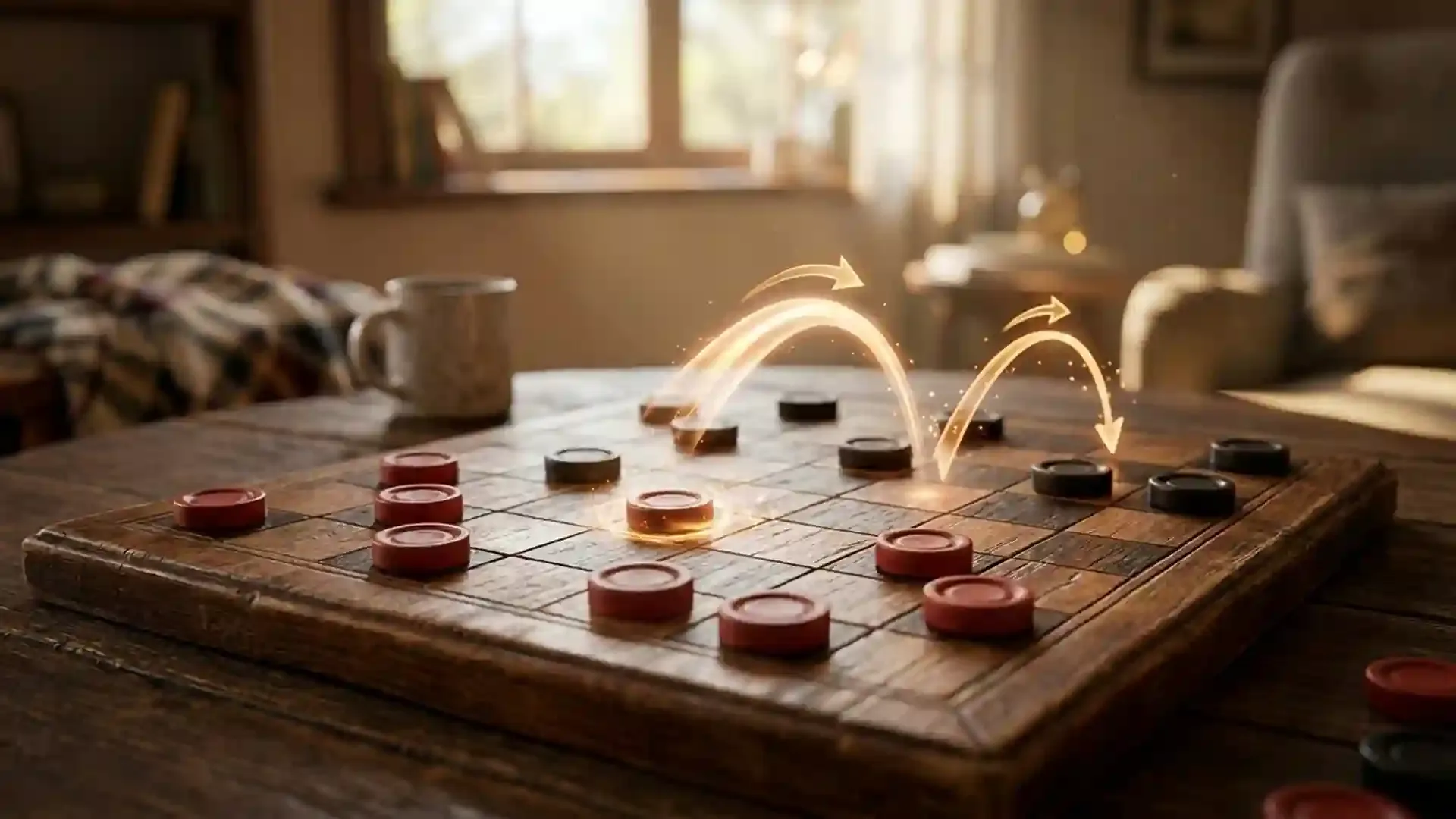
- Checkers: The fame of checkers lies in its seemingly simple yet complex nature. For centuries, players have studied how to win at checkers, trying to uncover flawless openings or master tactical combinations like a multiple-piece double jump in checkers.
Preserving the Legacy of Ancient Board Games
In an increasingly digital world, it becomes important for us to preserve our heritage through deliberate efforts.
Museums and Archaeological Preservation
Historical artifacts can be preserved through institutions like the British Museum. Historians help preserve these artifacts by repairing any damage and translating any surviving rules for future generations to know.
Digital Versions of Historical Board Games
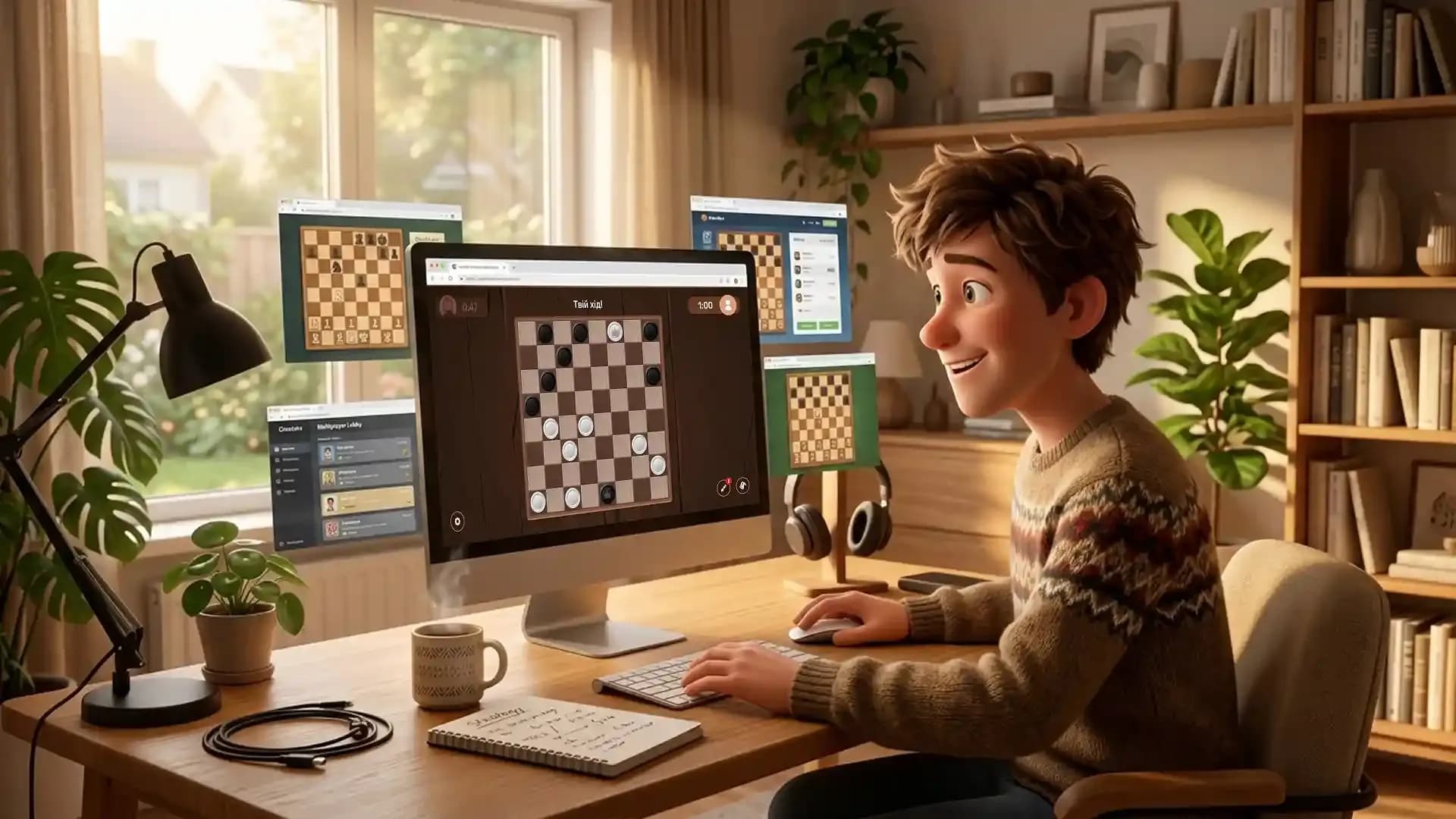
The development of mobile games and servers has led to the revival of many old games. Now, players who want to play checkers online have access to their own communities that span across the globe.
The Growing Popularity of Retro Board Games
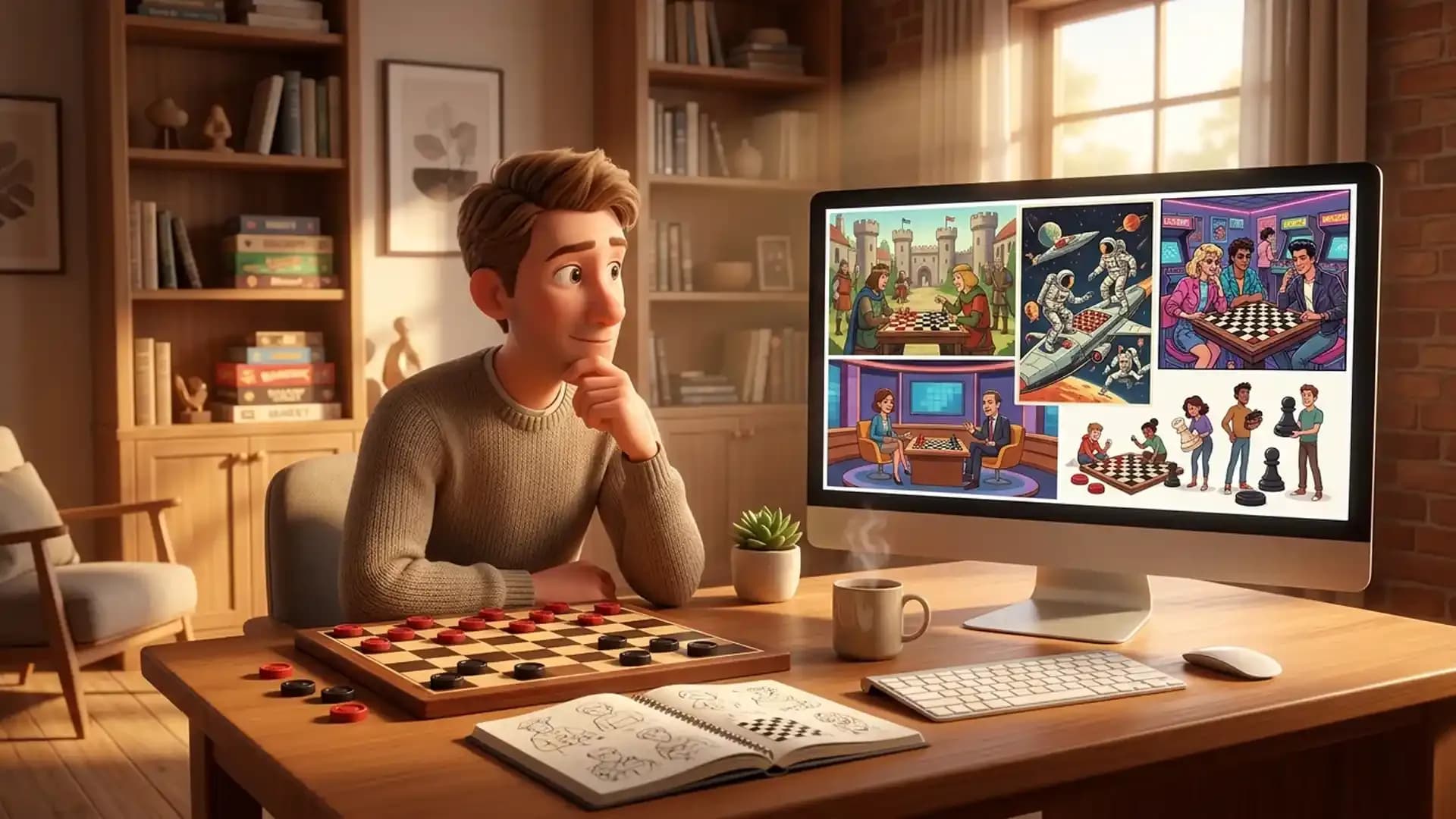
There is an enormous revival of interest in high-end, craft versions of traditional games. The trend towards acquiring premium boards crafted from sustainable wood, stone, or marble speaks volumes about the urge to appreciate traditional board games as more than merely disposable entertainment, but as works of art built to last a lifetime. Checkers in pop culture has contributed to this revival too, every time the game appears in a film scene, a museum exhibit, or a viral moment online, it reminds a new generation that the board is worth picking up again.
Conclusion
From the dusty relics of Mesopotamian tombs to the cutting-edge digital servers of contemporary chess competitions, traditional board games have been by humanity’s side throughout its cultural development.
These ingenious games, proven by time, show us that despite all technological innovations, the essential human need for challenge, communication, and competition remains exactly the same. Setting up a board game today is one way of participating in an uninterrupted gaming tradition stretching back thousands of years.
FAQs
- The oldest known board game with surviving physical components is Senet, discovered in Egyptian tombs dating back to roughly 3100 BCE. The Royal Game of Ur (c. 2600 BCE) is also among the oldest games with fully reconstructed, playable rules.
- Ancient games served multiple purposes beyond casual leisure. They were heavily integrated into religious rituals, used to simulate spiritual journeys into the afterlife, utilized by military commanders to practice battle tactics, and deployed as diplomatic gifts between rulers.
- Chess evolved directly from Chaturanga, a 6th-century CE Indian game that simulated the strategic layout and tactical movements of an ancient Indian army.
- Yes, games like Chess, Go, Backgammon, Mancala, and Checkers enjoy immense popularity worldwide, supporting professional tournaments, dedicated clubs, and millions of active online players.
- Playing these games enhances strategic thinking, patience, and memory retention. They offer fantastic educational benefits for children and provide a screen-free social outlet that supports deep family bonding.
- The earliest confirmed board game artifacts belong to the ancient Egyptian and Mesopotamian civilizations, appearing along the Nile and Tigris-Euphrates river valleys over 5,000 years ago.
- Traditional games generally feature minimalist, abstract components and simple, elegant rules that create complex strategic depth without relying on heavy narrative themes. Modern games often emphasize specific storylines, asymmetric player abilities, complex rulebooks, and specialized components.

Physical Board vs. Digital Checkers: Does the Classic Feel Get Lost Online?

US vs UK: Which Country Really Loves Checkers? (Checkers vs Draughts, Explained)
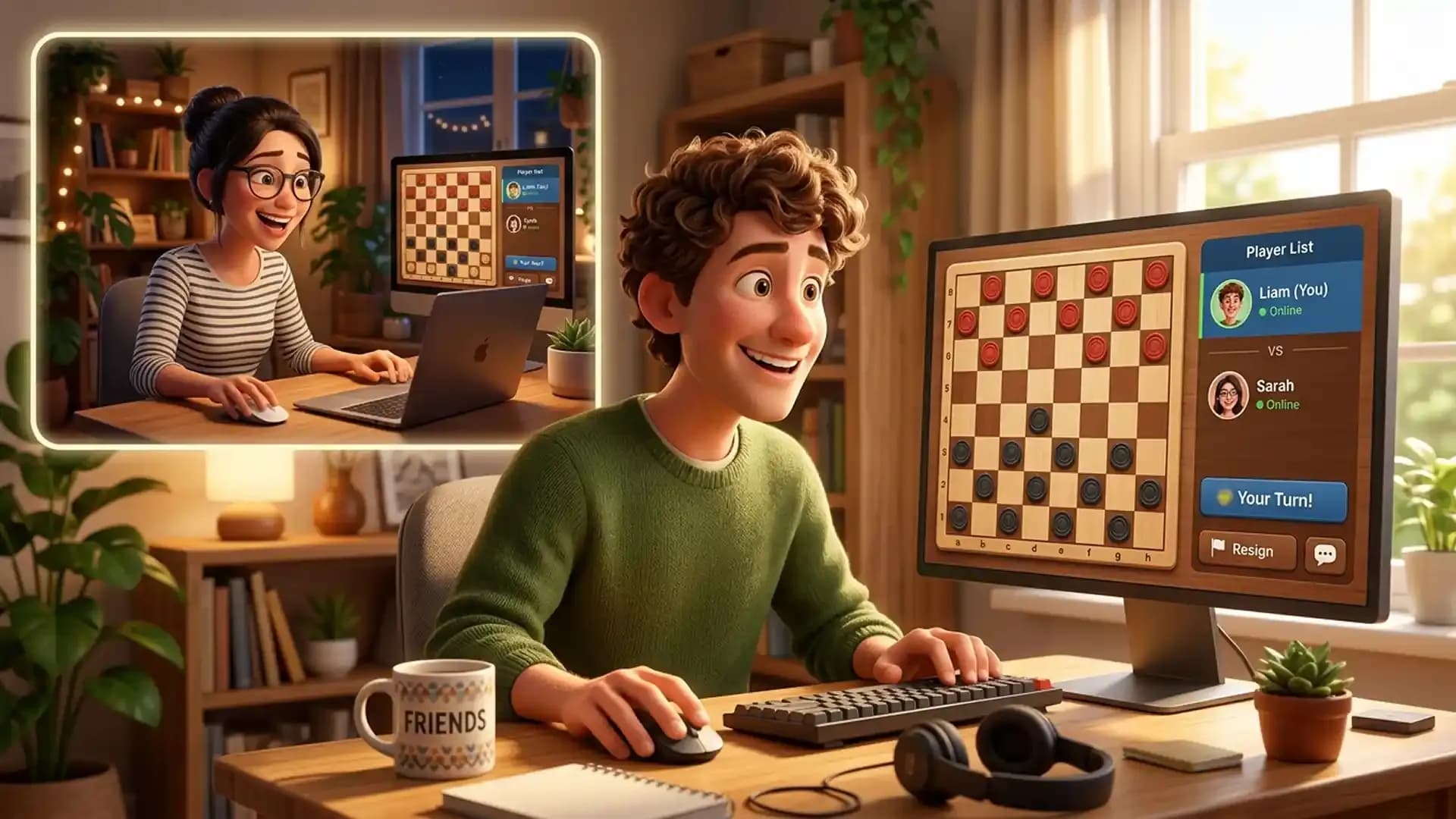
Enjoy Free Multiplayer Checkers with Friends Online
What Checkers Teaches You: Skills Beyond the Board
The Psychology of Checkers: Why This Simple Game Plays Mind Games