


King Moves in Checkers: Rules, Jumps, and Strategy Explained


Checkers has been one of the classic board games, and to know the king's moves in checkers is a must for anyone because it's not like chess, in which you have other pieces that have their own way of moving.
Whereas standard pieces are stuck, a king is an animal that can move in any direction that is diagonal. This gives you the freedom to move the board and move around, easily trapping your opponent, whether you are playing on a physical board or playing checkers online against others.
Table of contents
What Is a King in Checkers?

In checkers, every piece starts as a "man" or a regular checker. A successful journey across the board only makes him a king. However, before knowing the king's move in detail, you should know how to play checkers first.
How a Piece Becomes a King
Every time you land your piece on any square in the nearest row of the opponent (the back row), you are crowned. You or your opponent will usually put another checker on it to indicate its new rank. When this occurs, then it is a king. In the vast majority of games, you are finished when you arrive at the row of the king.
Why Kings Are Important
Kings are the most valuable assets on the board because:
- They Move Anywhere: They aren't limited to one direction.
- They Protect Others: A king can sneak up behind enemy pieces to guard your own.
- They Win Endgames: Most games are decided by who manages their kings better.
How Does a King Move in Checkers?

If you are wondering how a king moves in checkers, the logic is simple: it moves like a regular piece but with the "reverse" gear unlocked.
Basic King Movement
In regular checkers, your piece can only move forward to two squares. A king is superior in the sense that it can move to all four diagonal squares surrounding it, provided that they are open. This implies that a king can move forward and backward, and in some variants like flying king checkers, it can even travel across multiple squares in a single move.
Backward Movement Explained
The largest response to how a king moves in checkers is that he can move backwards.
- Escape: When an opponent is going to jump your king, then you can easily go backwards and get out of the way.
- Hunting: You can chase down an opponent's piece even after it has passed you.
- Agility: King movement in checkers makes the piece a "free roamer" that can jump in and out of combat.
Checkers King Movement Rules

To play correctly, you need to follow these specific rules for the king's movement. Also, you should know how to correctly setup checkers board.
- Diagonal Only: A king must always stay on the dark squares of a checkerboard, which consists of alternating light and dark squares, as explained on Wikipedia. It can never move straight up, down, or sideways.
- One Square at a Time: In basic rules, a king still only moves one square at a time unless it is jumping over an opponent's piece.
- Mandatory Jumps: If your king is next to an opponent's piece and there is an empty square behind it, you must jump. This is not optional. If your king has multiple jumping options, you can choose the path, but you cannot skip the jump entirely.
- Chain Jumps: A king can jump multiple pieces in one turn. If it lands after a jump and has another piece it can capture, it continues the move. Because of the king's movement in checkers, these jumps can go forward and then immediately backward.
Can a King Jump Backward in Checkers?
A king can jump backward, which is its best trick. While you can easily run past a regular piece, a king can simply turn around and catch you. It can even "zig-zag" during a single turn by jumping forward and then backward to take out multiple pieces at once. This zig-zag ability becomes even more central in variants like the one used when you play Brazilian Checkers online, where crowned pieces glide across full diagonals rather than a single square at a time.
King vs Regular Piece: Comparison
| Feature | Regular Piece | King |
|---|---|---|
| Move Forward | Yes | Yes |
| Move Backward | No | Yes |
| Jump Forward | Yes | Yes |
| Jump Backward | No | Yes |
| Distance | 1 Square | 1 Square |
| Versatility | Limited | High |
Winning Strategy Using Kings
Having a king is great, but using it wisely is better. Here is how to win with them:
- Own the Center: Keep your king in the middle of the board. From there, it can reach any corner quickly.
- Don't Trade Too Fast: Don't let your opponent trick you into a 1-for-1 king trade unless you are already winning by a lot.
- The "Shadow" Move: Use your king to follow an opponent's regular piece. By staying behind it, you prevent it from ever reaching your back row.
- Double Teams: Use two kings together to corner a single enemy piece. One king blocks the path while the other goes for the capture.
Common Mistakes to Avoid

- Leaving it Alone: It can be besieged by three or four ordinary pieces and become entangled even in the hands of a king.
- Forgetting Jumps: It is always important to remember to ask whether your king is under pressure to make a jump or double jump in checkers. An ingenious opponent now and then will make an apparent sacrifice with a piece, and then you will find your king in a trap.
- Cornering Yourself: Place your king in the far ends of the board only when it is necessary, because it restricts your way of moving towards a single direction.
These traps become even sharper in fast-promotion formats like Russian Checkers, where a single missed jump can hand your opponent an instant king before you've had a chance to react.
Different Types of King Rules
American/British Checkers: The king moves only one square at a time.
International Checkers: Plays with Flying Kings. These kings can move along the entire diagonal line, just as a bishop in chess, and hence they are so powerful. These are the two different variations of checkers.
The quickest method of improving your strategy in the game of checkers is to master king moves. The ability to move and jump backwards will turn a small piece into a multi-purpose monster. The multi-directional movement of the king enables him to control the center, chase the incoming pieces, and avoid the perilous traps.
In order to win more checkers games, concentrate on getting to the back row first and use your kings to spearhead. A king is not a piece; it is your ace in winning the game with its superior mobility and range of tactical advantage.
FAQs
- A king moves diagonally in any direction (forward or backward) one square at a time. It takes by leaping past a piece of an opponent to an open square.
- Yes. The kings are not restricted like ordinary pieces, as they are free to move as well as jump backwards.
- Yes, but there must be a blank square between each piece, and there must be a blank landing square after each jump.
- Kings are obliged by the rules to make diagonal steps, any kind of jump they have, forward or backward, or jump.
- Absolutely. It is the most dangerous and versatile piece on the board, with four directions of movement, compared with the two-directional movement.

Physical Board vs. Digital Checkers: Does the Classic Feel Get Lost Online?
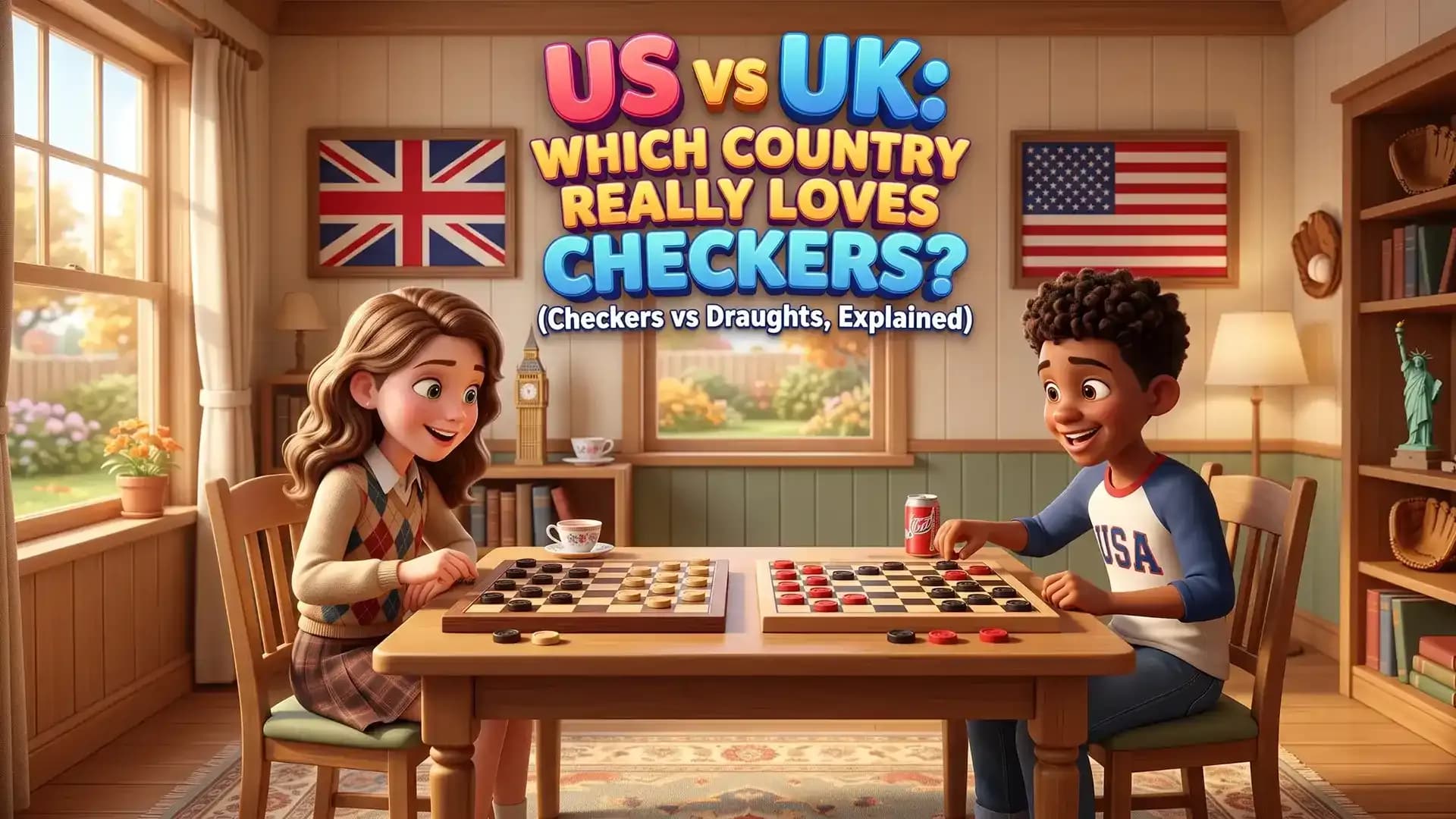
US vs UK: Which Country Really Loves Checkers? (Checkers vs Draughts, Explained)

Enjoy Free Multiplayer Checkers with Friends Online
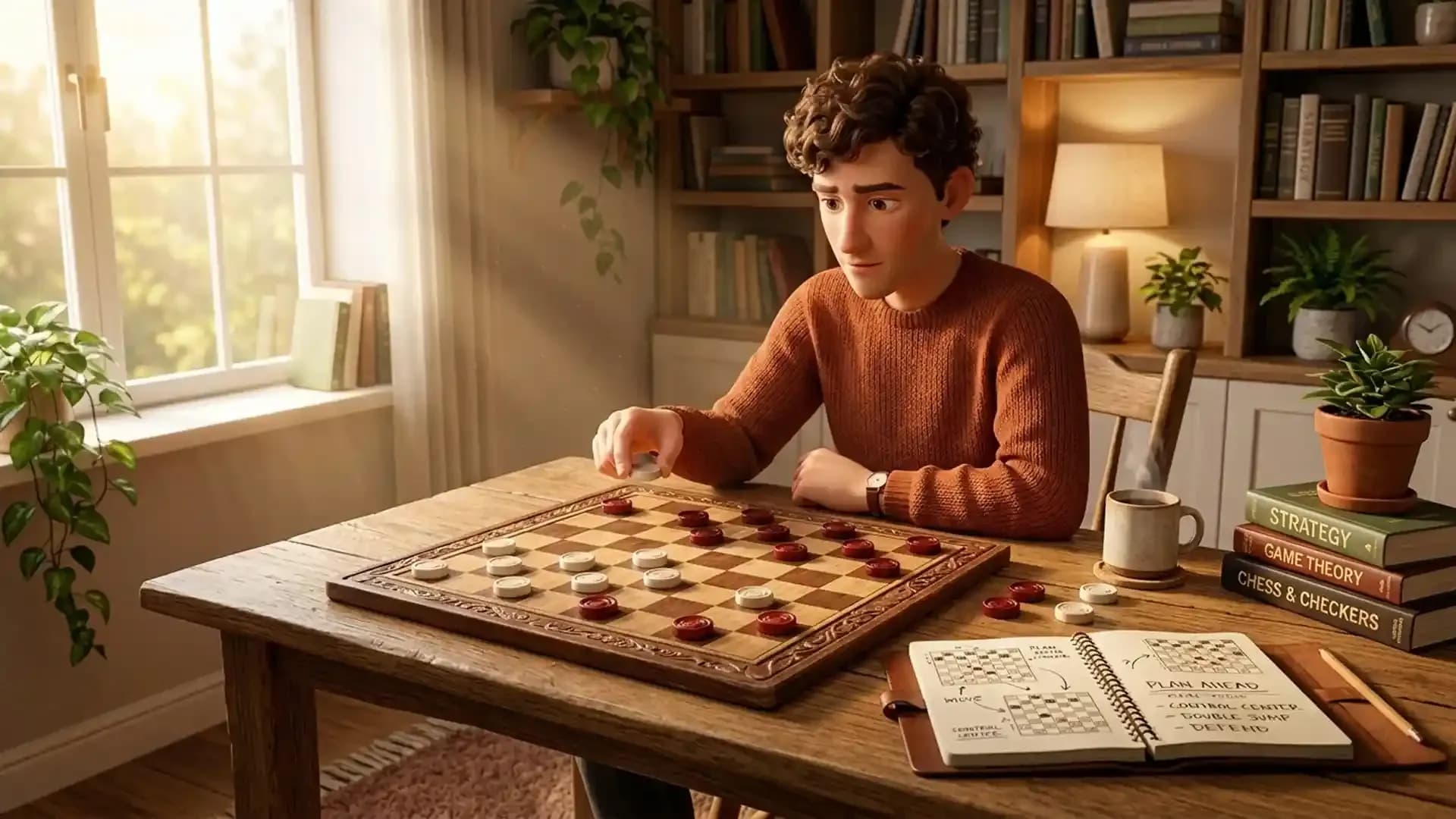
What Checkers Teaches You: Skills Beyond the Board
The Psychology of Checkers: Why This Simple Game Plays Mind Games