


Is Checkers a Solved Game? Yes Here's What That Really Means


Is checkers a solved game? Is the question asked by many, and the answer is yes, checkers is a solved game which has been played in many cafes, schoolyards, and tournament halls.
Playing checkers online or over the board looks easy because you just jump over opponent pieces diagonally to eliminate them. However, if you are asking if every game can be won, the answer is nope, because a game can end in a draw. Even when you play checkers online, the same rules apply, and you will often find that perfect moves from both sides lead to a balanced standoff rather than a win.
Table of contents
- What Does It Mean for a Game to Be "Solved"?
- Who Solved Checkers? The Story of Jonathan Schaeffer and Chinook
- How Did Chinook Solve Checkers? The Method Explained Simply
- Marion Tinsley: The Human Who Came Closest to Perfect Checkers
- What Does "Solved" Actually Mean for Checkers Players?
- Solved Games Comparison: Checkers vs Chess vs Other Games
- What Solved Means for Modern Players
What Does It Mean for a Game to Be "Solved"?
In game theory, a solved game is one where every position is deterministic with respect to the outcome under perfect play. When considering the history of checkers, researchers finally proved the game is a draw when both sides play perfectly.
There are three levels of solving a game:
- Ultra-weakly solved: A computer can demonstrate that the first player can win, lose, or draw at the initial move, but it may not know all the moves thereafter.
- Weakly solved: The game is solved starting from the initial position and provides a strategy that achieves the predicted outcome against any opponent.
- Strongly solved: The computer is aware of the best move of a given position in the game, regardless of the number of previous mistakes taken.
Checkers is said to be weakly solved. Scientists have established that when neither player commits an error, the game will necessarily be a draw.
Who Solved Checkers? The Story of Jonathan Schaeffer and Chinook
Jonathan Schaeffer and his team at the University of Alberta are credited with solving the game of checkers. In 1989, the project started with the development of a computer program named Chinook.
It was not an overnight success. This project lasted 18 years, with an enormous processing power and advanced algorithms involved. The conclusive evidence was eventually published in the scientific journal Science in 2007.
How Did Chinook Solve Checkers? The Method Explained Simply
Resolving a game where there are 500 quintillion ($5 \times 10^{20}$) possible positions cannot be easily achieved by trying all moves. Trying to count them one by one, the universe would end before you would finish. This level of complexity is why many people ask whether chess is harder than checkers, as both require immense computing power to analyze. Rather than raw calculation, the Chinook team applied two main techniques:
1. The Endgame Database
The team began after the game ended, then went backward. They worked out all the possible positions with two pieces on the board, then three, then four, and so on up to ten. This enabled the computer to be aware of the game's outcome as soon as only 10 pieces remained.
2. Heuristic Search
For the middle of the game, where there are too many pieces to calculate every branch, Chinook used advanced search algorithms. It explored the most likely paths from the starting position to the "known" results in the endgame database.
By 2007, Chinook had explored sufficiently of these paths to demonstrate that the opening move is a draw. When you play Chinook today, you can at best hope to draw, and when you commit but one slight error, you will lose.
Marion Tinsley: The Human Who Came Closest to Perfect Checkers
You cannot talk about how to win checkers at the highest level without mentioning Dr. Marion Tinsley. Often considered the greatest checkers player to ever live, Tinsley was a human anomaly. In a career spanning 45 years, he reportedly lost only seven games.
In 1992, Chinook played Tinsley for the world championship. Tinsley won. It was a landmark moment for human intuition over raw silicon power. However, by their rematch in 1994, Tinsley had to withdraw due to health issues, and Chinook eventually became the first program to win a human world championship title.
Tinsley's ability to see the board was so profound that researchers used his games to help refine Chinook's logic. He was, for all intents and purposes, the human equivalent of a solved algorithm.
What Does "Solved" Actually Mean for Checkers Players?
Does the fact that checkers is solved mean the game is dead? Not at all. For the average player, the solution has almost no impact. The complexity of 500 quintillion positions is still far beyond the reach of the human brain. You cannot memorize the solution, so every time you focus on a checkers board setup, the match remains a test of skill, psychology, and strategy.
However, in the world of high-level competitive play, the game's solved nature led to the adoption of 3-move restrictions. In these tournaments, the first three moves are chosen at random from a deck of cards. This forces players into unconventional positions and prevents them from simply playing out the perfect draw every single time.
Solved Games Comparison: Checkers vs Chess vs Other Games
| Game | Status | Outcome of Perfect Play |
|---|---|---|
| Tic-Tac-Toe | Solved | Draw |
| Connect Four | Solved | First Player Wins |
| Checkers | Solved (2007) | Draw |
| Chess | Unsolved | Likely a Draw (Estimated) |
| Go | Unsolved | Extremely Complex |
What Solved Means for Modern Players
Does the fact that checkers is solved mean the game is dead? Not at all. For the average player, the solution has almost no impact. The complexity of 500 quintillion positions is still far beyond the reach of the human brain. You cannot memorize the solution, so every time you focus on a checkers board setup, the match remains a test of skill, psychology, and strategy. This is why even the top Draughts Players continue to rely on deep preparation, strategic understanding, and years of experience to compete at the highest level.
So, even though a program such as Stockfish might be incredibly intelligent, it is still simply computing the best possible guess rather than following a proven course of action to the finish. This highlights the primary difference between chess and checkers when it comes to computational limits. In a solved game like checkers we can be sure that the perfect play will result in a draw, but in chess, we have no idea whether perfect play will result in a draw or a guaranteed win for one side.
FAQs
- No. Chinook is a perfect player as the game is solved. If you play perfectly, you will draw. You lose in case you make a mistake. In no situation could Chinook commit an error that would give a human an opportunity.
- The sheer number of positions required immense computing power. The project used hundreds of computers running simultaneously over nearly two decades to map out the necessary paths to the draw.
- Only if you are a computer! For humans, the game remains a deep and rewarding challenge. The solution just proves that the game is balanced, making it a fair test of intellect between two people.
- While small games are solved frequently, checkers remains the most complex popular game to be fully solved. Games like 6x6 are solved, but the 8x8 version is still under development.
Physical Board vs. Digital Checkers: Does the Classic Feel Get Lost Online?
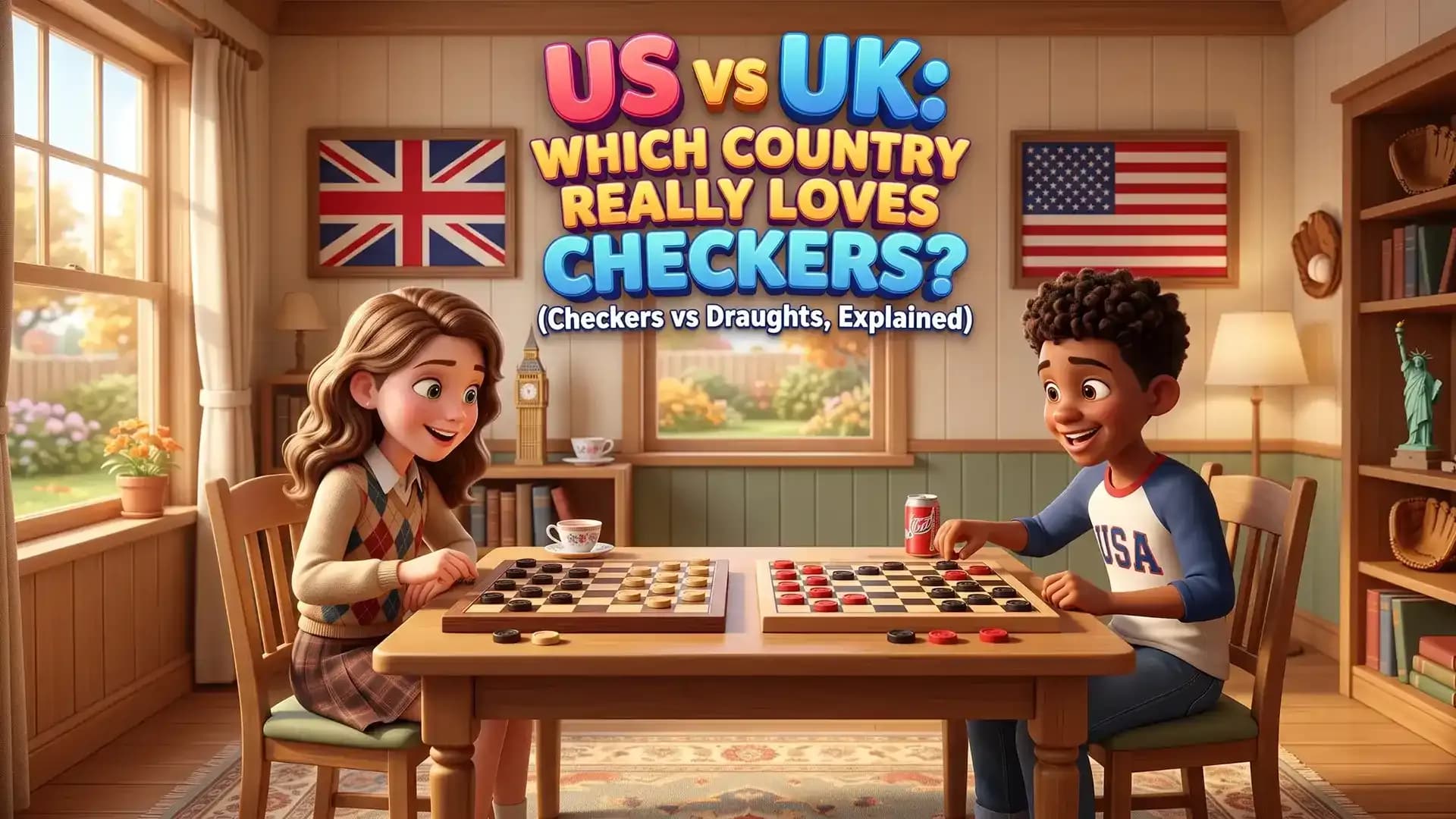
US vs UK: Which Country Really Loves Checkers? (Checkers vs Draughts, Explained)
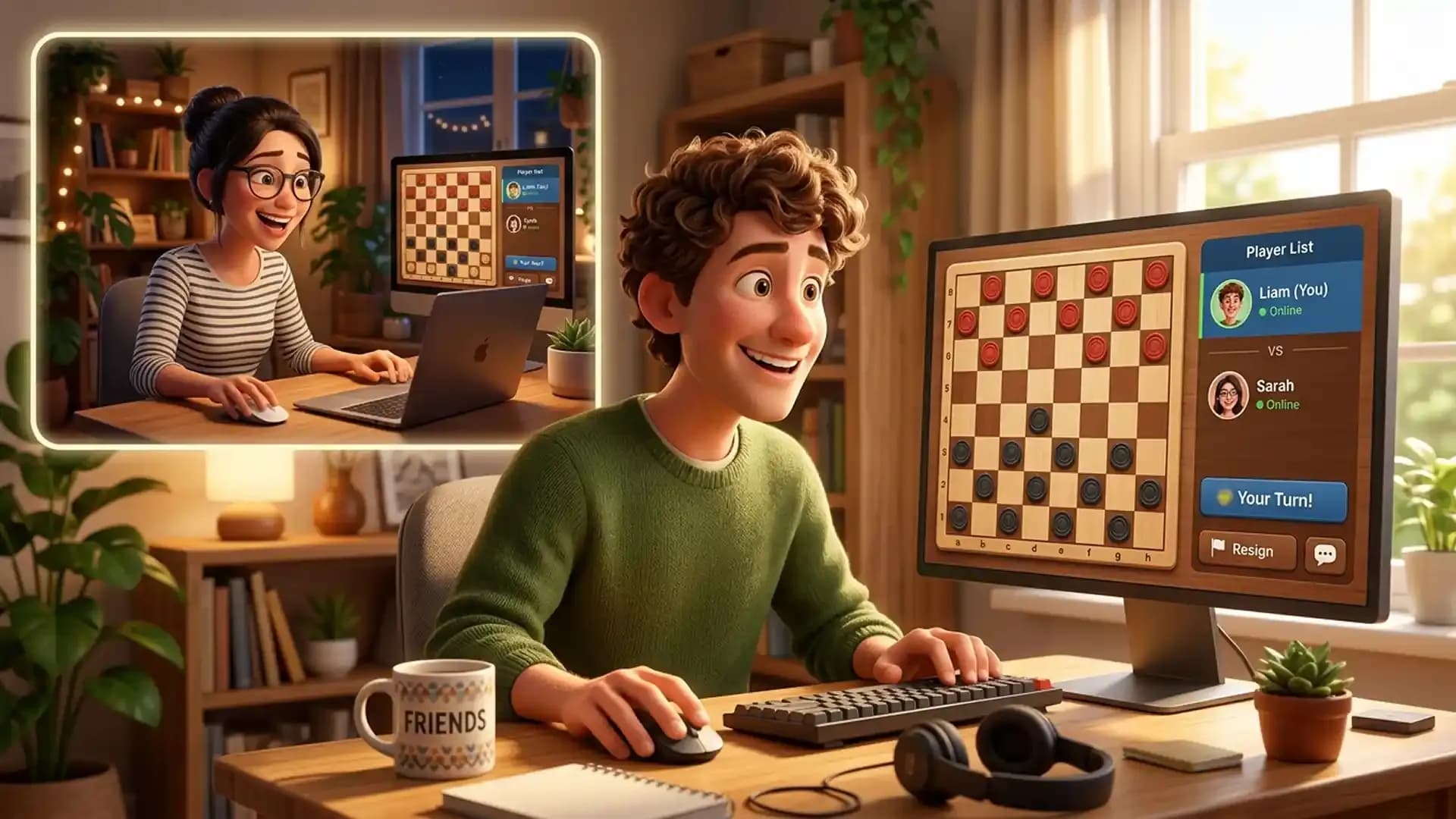
Enjoy Free Multiplayer Checkers with Friends Online
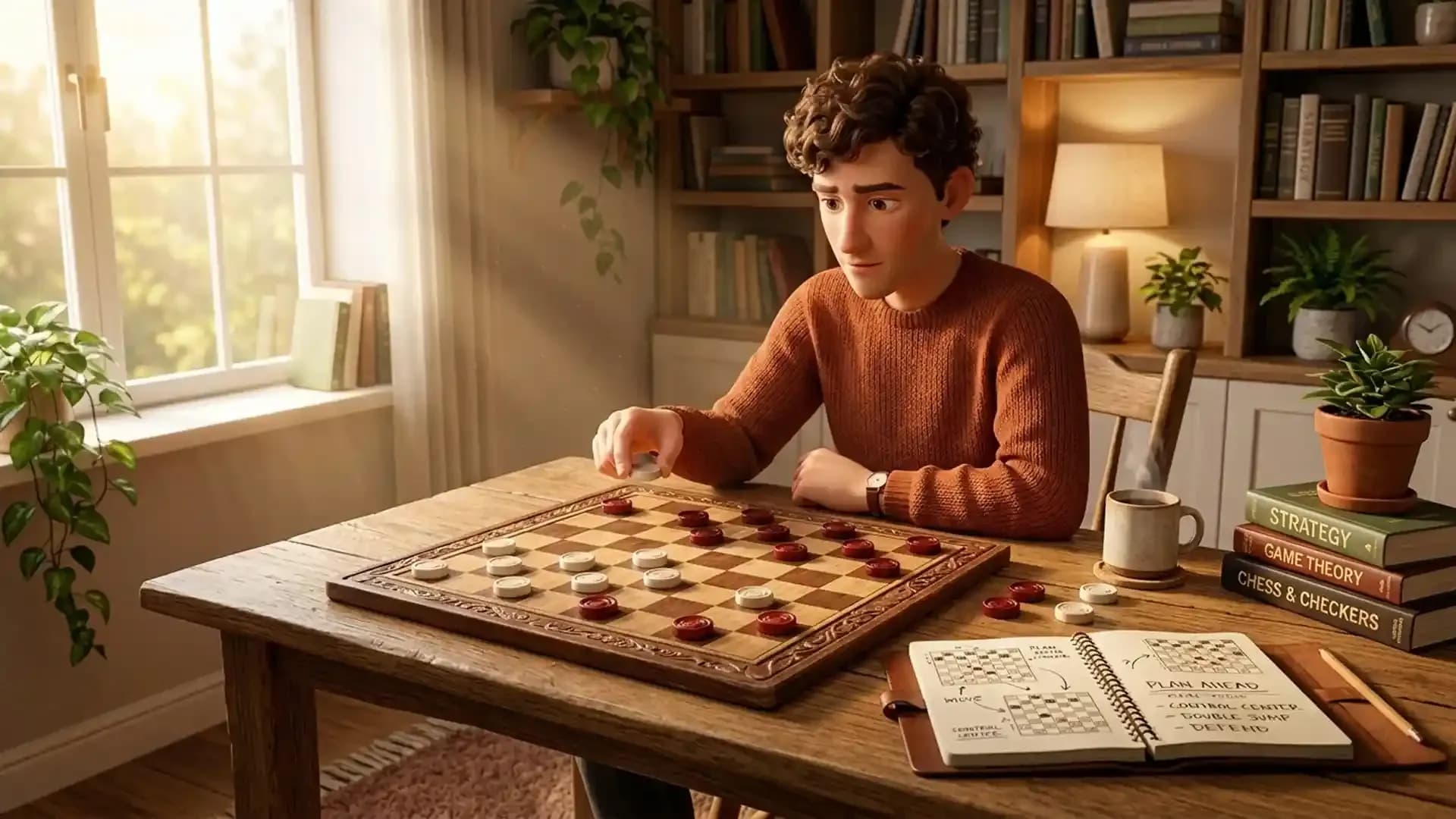
What Checkers Teaches You: Skills Beyond the Board
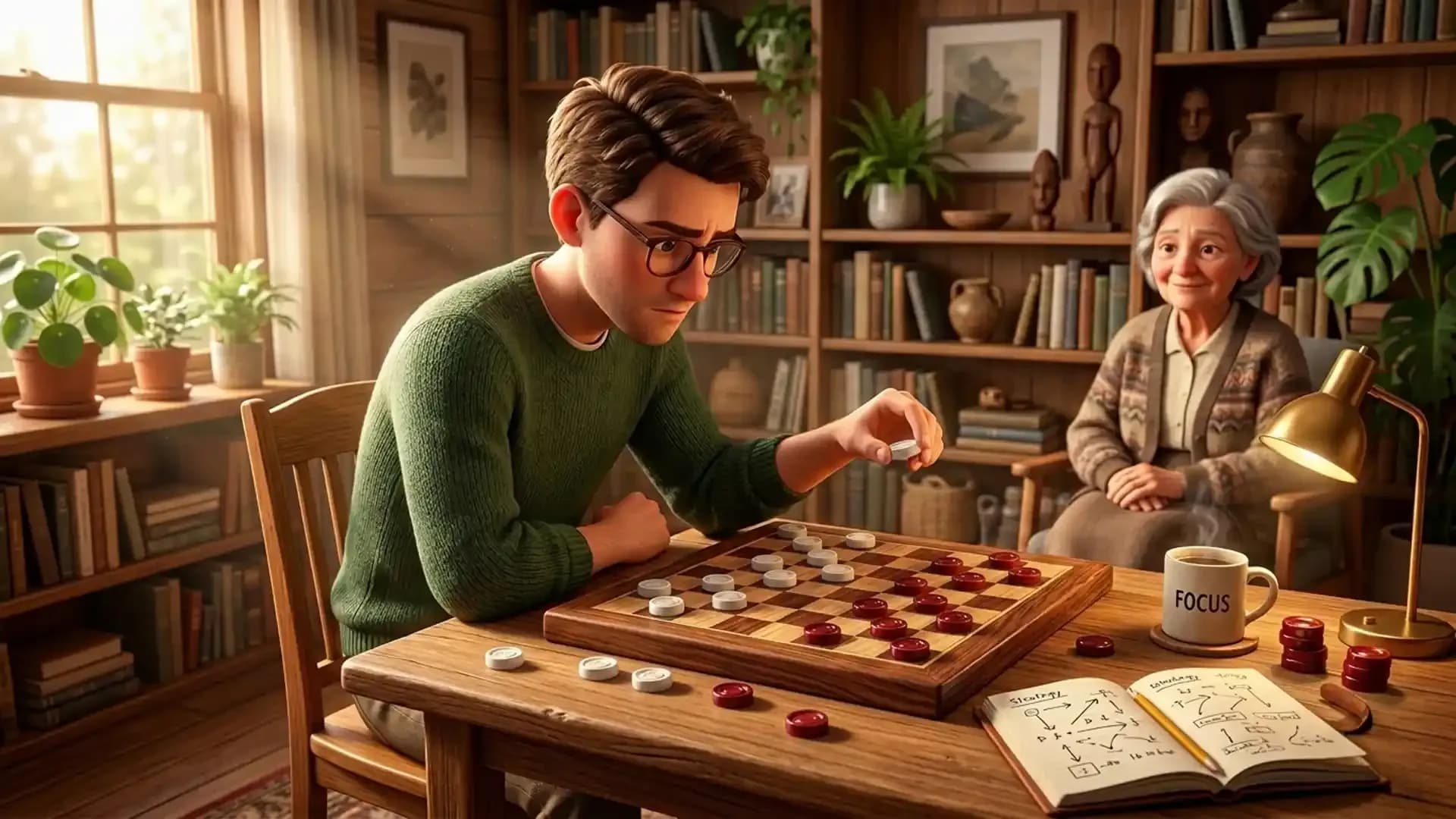
The Psychology of Checkers: Why This Simple Game Plays Mind Games